Pumping up dinghy and running outboard engine

New bottom board

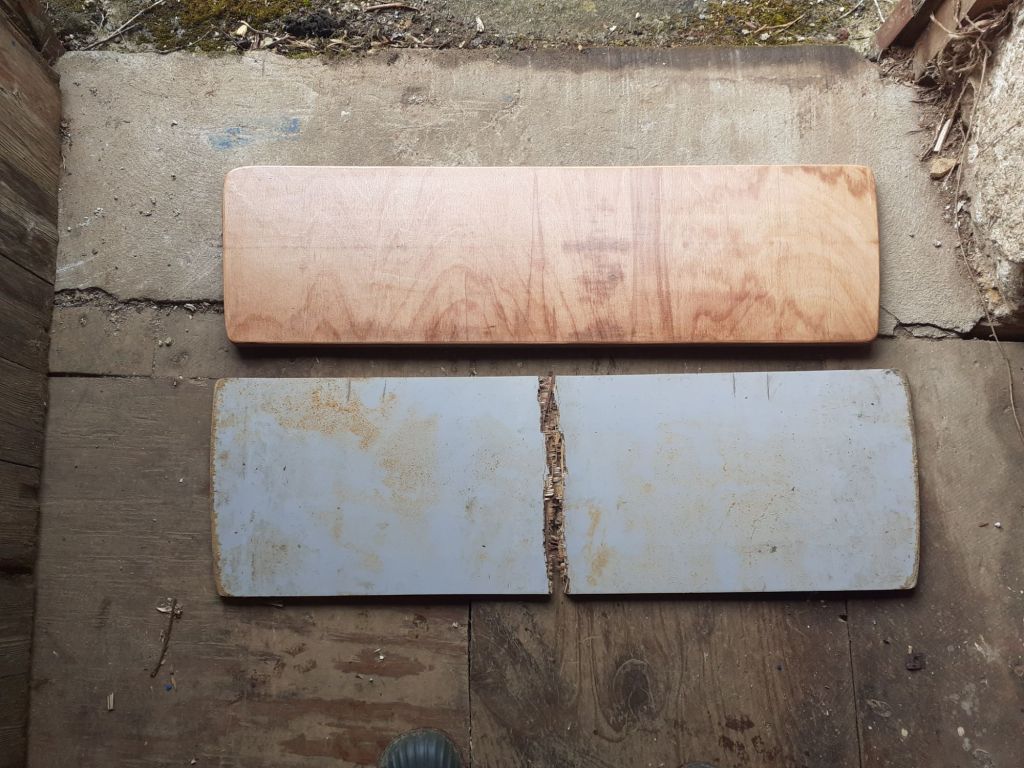
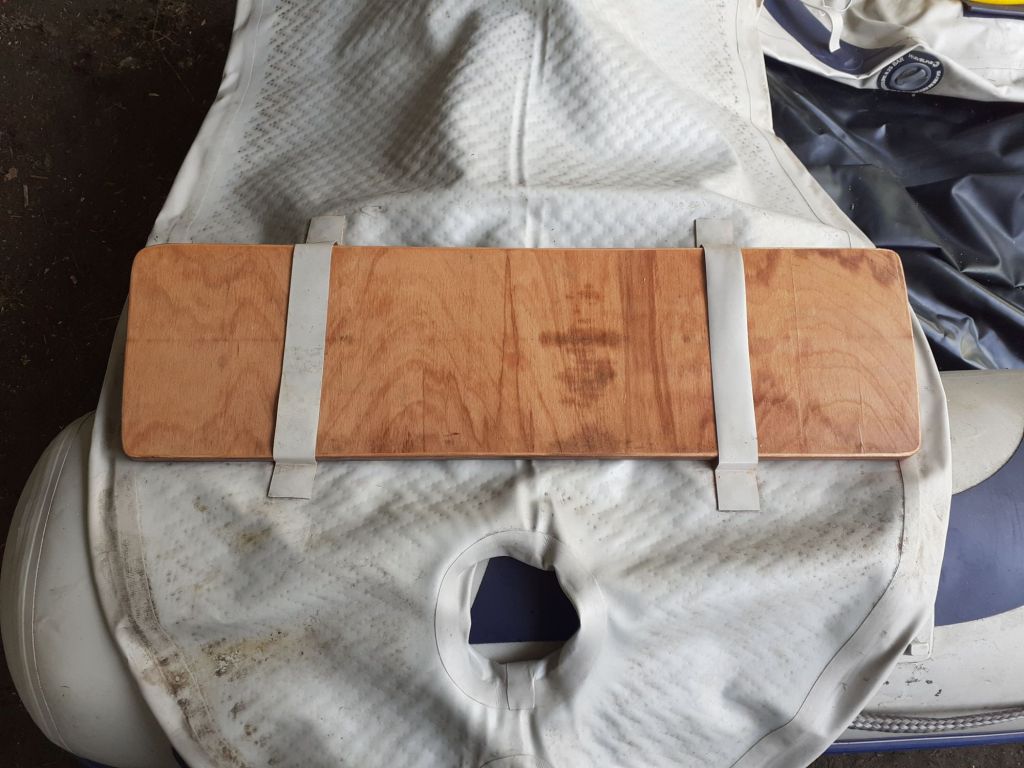
The time had come to get the dinghy out and pump it up for the new season. I had made a new 20mm plywood board for the underside of the inflatable floor as the 12mm ply which came with the new dinghy 2 seasons ago had broke in half last year. The board keeps the RIB shape correct, which is needed to control the dinghy direction when in use.

Board under floor
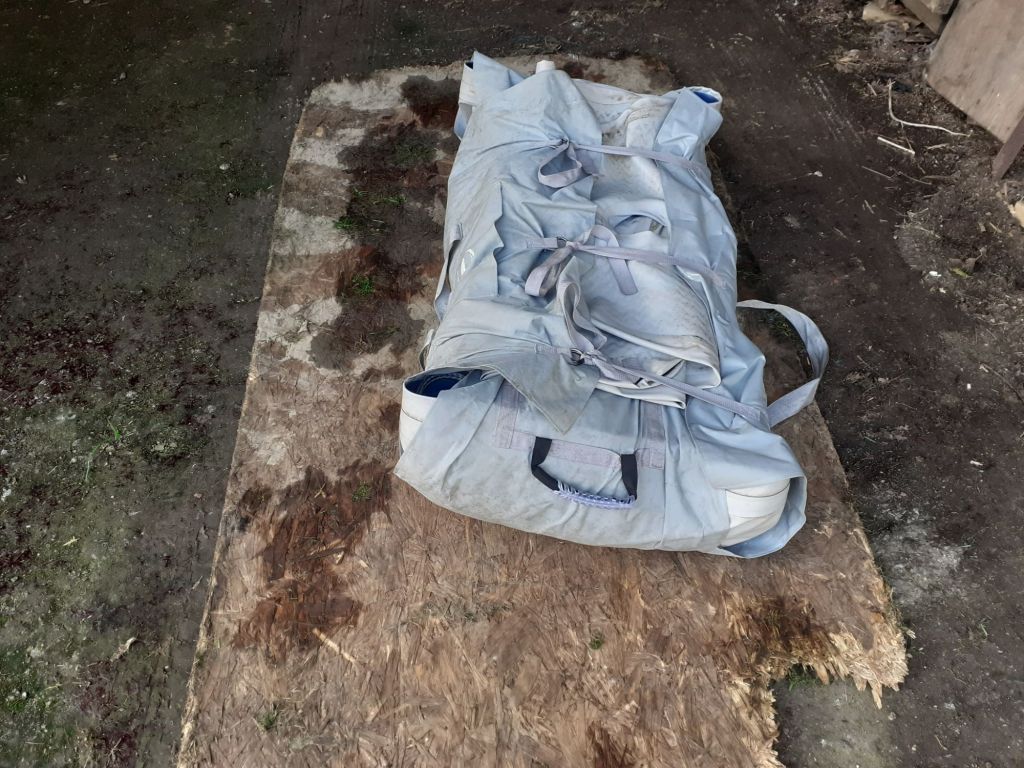
Bagged
Start pumping!

It’s quite heavy and awkard to move in its packed up state, I am always glad the bag has lots of handles. Next thing is to unpack and start pumping before rolling out the inflatable floor, more pumping, fitting the seat and ores, then the dinghy is ready for use. I went and found its launching trolly in the back of one of my sheds and pulled the dinghy onto it.

Ready to use

Next was the turn of our outboard, I have a 3.3hp 2 stroke Mercury which I bought new in 2006, we only use about 10lts of petrol each season so it almost dose no work at all. I use brush cutters in my job which burn 200lts each season and last about 4 years. The Mercury should last me 80 years at that rate if I look after it, after 18 years its only 1/4 way though its life! The problem is the fuel these days, E10 isn’t any good for these outboards, it attracts water and since outboards are surrounded by water, as soon as I open the air vent, water is likely to get into the tank! But I do my best to look after the engine by using a water filter funnal for all new fuel from any fuel station and use a E10 fuel additive. At the end of the season I empty the fuel tank and run the carburetor dry.

The engine hadn’t been started since last October. Getting the outboard from the shed, I first change its spark plug. Then I cleaned out its cooling water outlet which involves removing the fuel tank and using a small drill bit to clean out any salt cristles. Once done I fix the tank back on and fill it up with fresh treated fuel. Then I take the outboard to a water butt I have and clamp it on with its leg in the water. Open the air vent, turn on the fuel, with kill cord attached, I pull the starter cord, 2nd pull it starts. I check the water is flowing and I am happy its ready for a sea trial.

The next day I load the dinghy, trolly and outboard onto the pick-up and drive down to St Anthony, unload the dinghy onto the trolly and push it to the waters edge. Than I carry the outboard down and fix to the transom, padlocking it on. Then I launch the dinghy, get in and row out a bit because it was an onshore wind. Then I started the engine and motored around Gillan harbour to make sure it was working properly, which it was. Then it was back to the shore, pull dinghy out and up the beach and make off to a yacht support frame, so the tide wouldn’t take her away, then back home.

Ready to sail

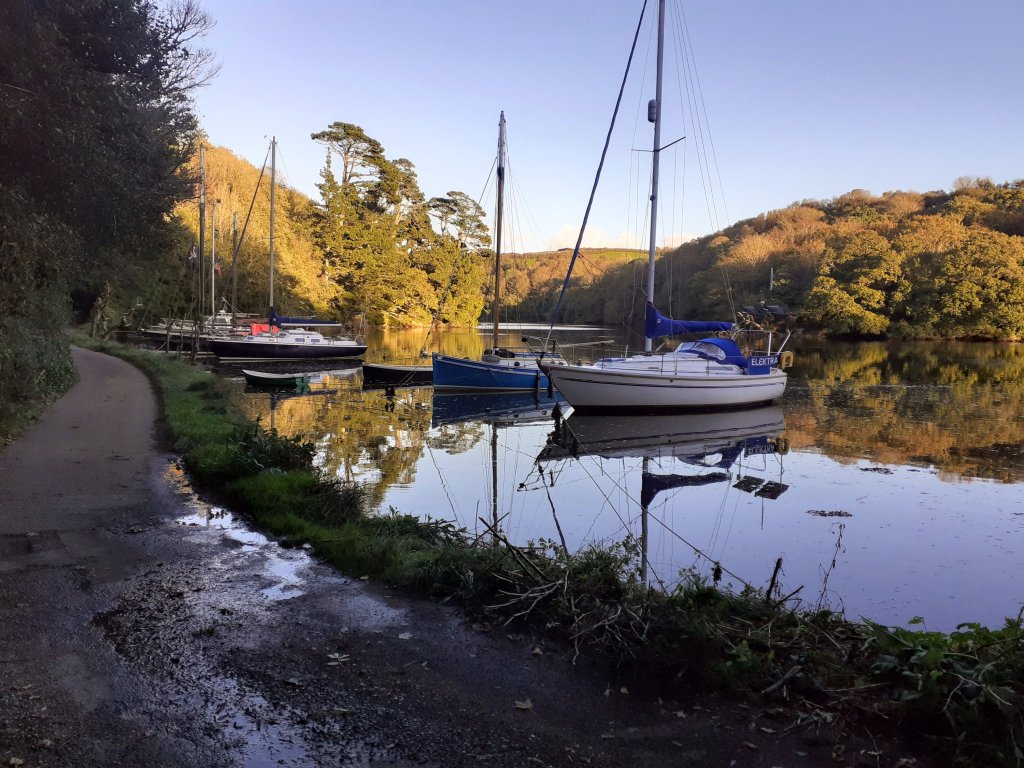
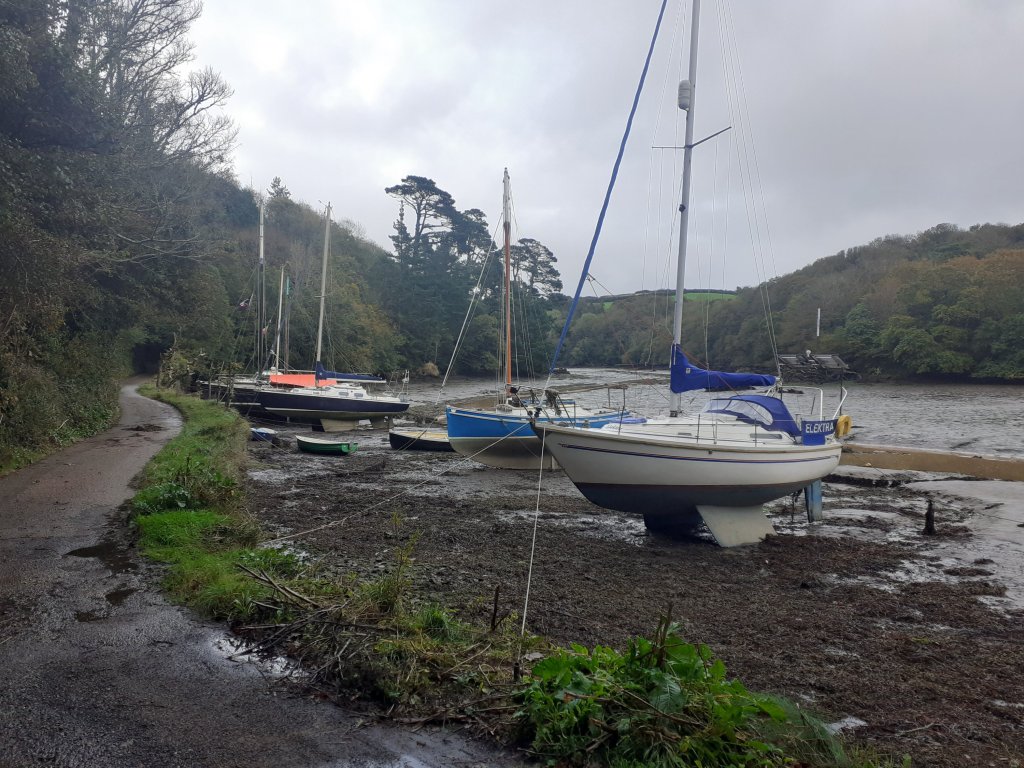
Back in Creek after antifouling

After the last time I was aboard, it had rain non-stop for 4 days followed 4 days of dry weather which I had used for work, luckly it stayed dry one more day to allow me to bend on Elektra’s sails and rerun her sheets, next day the rain started again!

Two days later during a dry few hours I went back to Elektra and fitted her cockpit encloser. Vicki had arranged for her to be professionlly cleaned and I was worried that on the day it would be pouring down with rain! With the cockpit covered, would stop the rain driving in the companion way hatch. Days of rain followed with with the planned clean on the 28th which was forecasted for heavy rain. But they were lucky, they managed to get aboard and off again between the heavy wintery showers.

Cockpit enclosure up, Elektra is starting to get really muddy again.

Today Good Friday, I went back to Elektra and removed the cockpit encloser and fitted her dodgers and a pair of new reefing lines for the mainsail. She is now ready to sail but the forecast for the comming week is more heavy rain. So the plan now is to move her back down the creek on Sunday 7th April to St Anthony beach to load her cruising gear and stores. Weather permitting Elektra will then go on her seasonal mooring on Monday 8th.

Now ready to sail, just waiting on better weather!

Rain, will it ever stop?

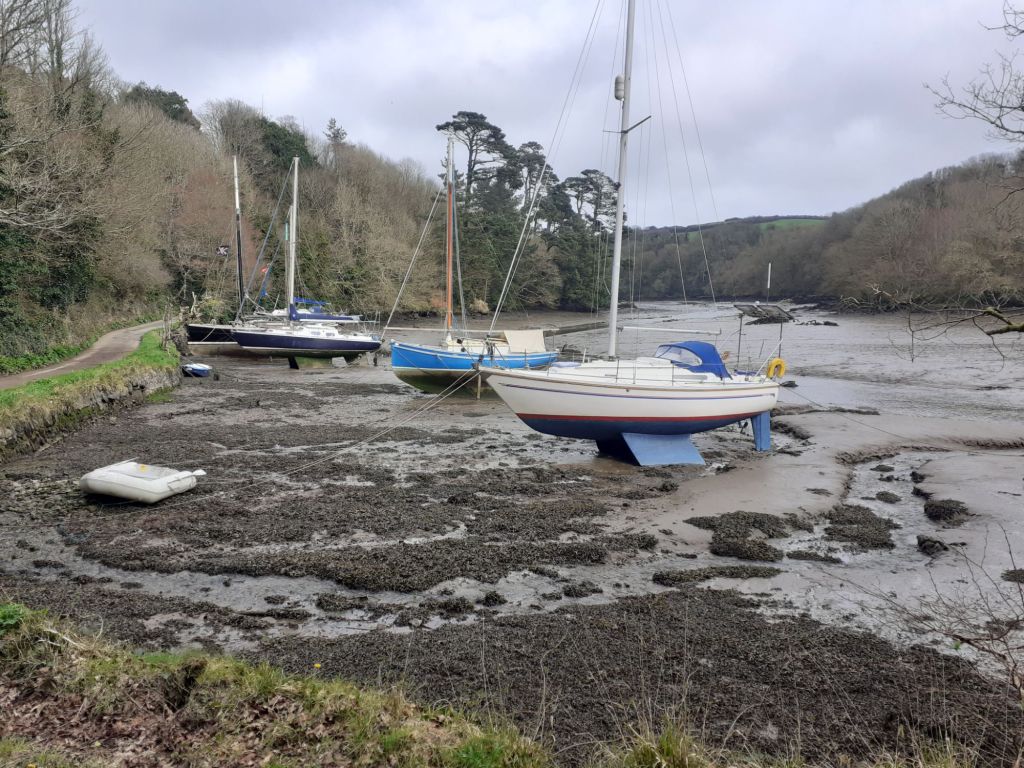
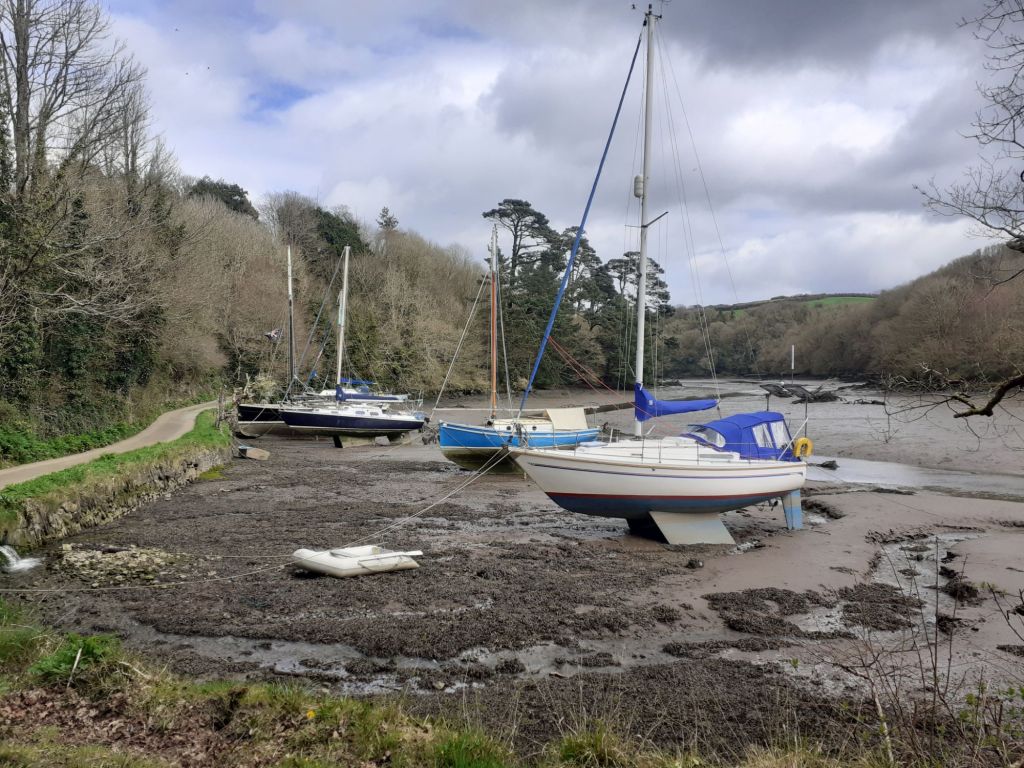
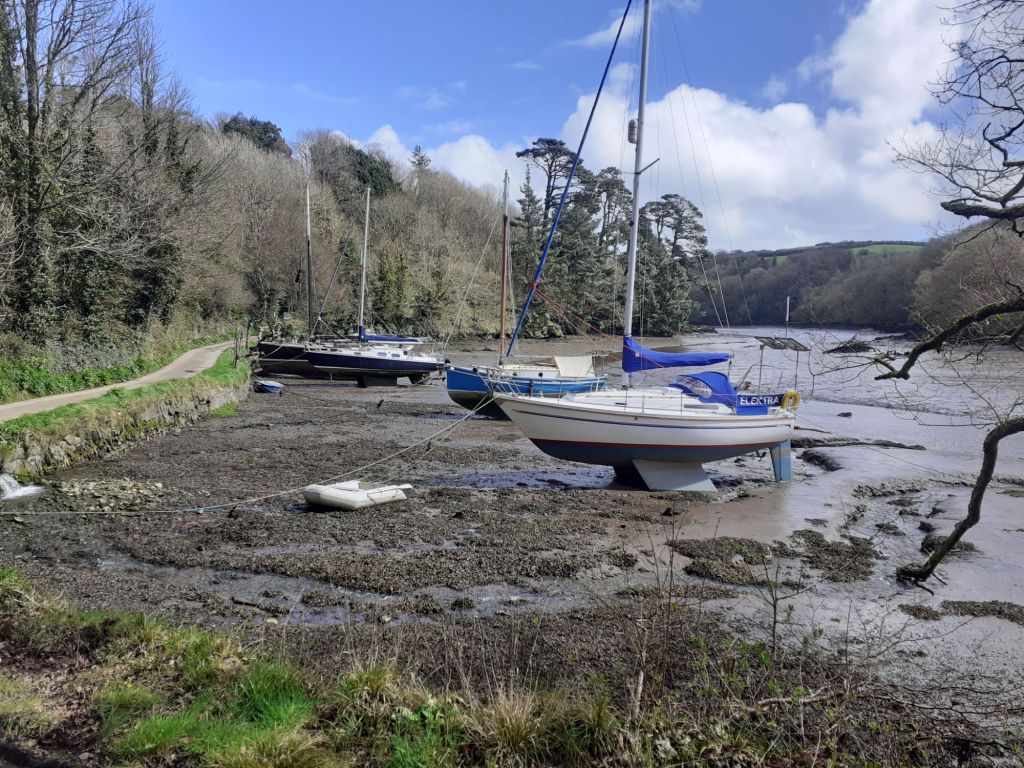
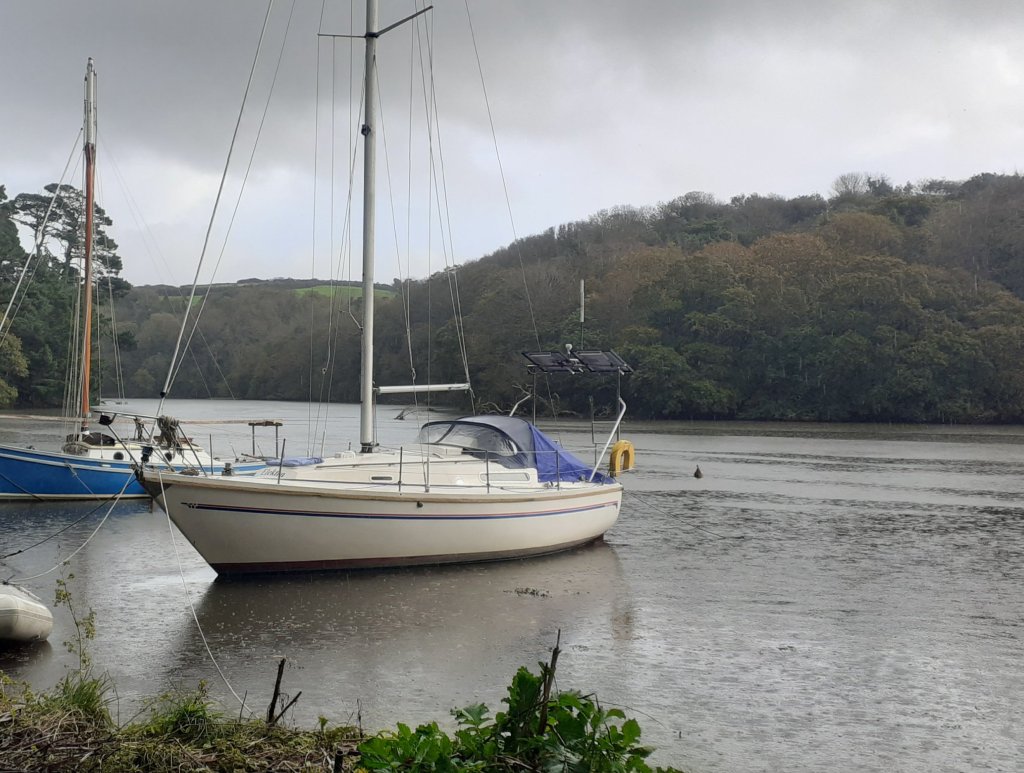
Back on her winter berth

Since the 7th of February we have only had 14 dry days, I had used 9 of them for work. There were winter jobs on Elektra which needed dry days to complete but with rain most days, I was finding it dificult getting them done and time is running out.

Fresh water collecting under the floor

On the 13th March a dry day arrived which I could use. High water was 0704 and I was down to Elektra soon after the tide had fallen enough to get aboard, about 0930. Dry jobs need dry decks and by then the wind had dried the decks. My first job was to rebed two deck eyes to port and starboard. Though most of last summer and this winter I had been trying seal a leak, freshwater was getting into under the floor at the bottom of the companion way steps. Since this leak had first started I had removed and rebedded the port galley window, all the sprayhood fittings, the companion way hatch garage plus removed eyes and the filled holes on the side decks but we still had the leak! All the winter the leak seemed to have stopped until Elektra was pulled out for antifouling and the it started again! Elektra mainly sits slightly bow up on her winter berth and all deck water runs of over the stern but she had been sitting level or slightly bow down in the yard and the side decks were puddling up around the eyes. The only things left on the side decks were these two eyes, I had considered removing them but really I needed warmer weather to fill the holes, so I opted for rebedding instead. On the inside the nuts were almost impossible to get at, but I am well use to doing these sorts of jobs on my ground care equipment, so had the tools aboard to do. Once removed I could clean up the deck, rebed and fix in place (time well tell if it has worked). After which I cleaned of the sealent which had pressed out.

Then I changed over the winter wash board for the summer wash board which I had repaired over the winter. Then I cleaned up Elektra’s teak gunnel rail and hand rails and coated all teak with “Semco” which I have been using since first cleaning up her teak in 2020.

Antifouling and jobs ashore

Ready for work to begin

Elektra had been pulled ashore on Wednesday 28th of Feb for a week, mainly to allow me to give her a coat of antifouling. The forecast can only be described as changeable, I was looking for a dry day. The forecasters were showing some dry over the weekend but each time I looked it was different, I did some cleaning on Thursday and partly filled the water tank only to discover a joint was leaking, then I broke one of the joints taking the pipework apart! Friday was heavy rain, with rain also forecasted for Saturday, Sunday looked better. Friday during the heavy rain I went out and got a new pipe joint.

After getting out on Saturday the looking drier than the forecast so I drove down to Elektra to start the antifouling. After a night of rain Elektra was mainly dry but where the cockpit drains, anchor locker drains and deck run off were she was wet. I started by bunging all the holes and drying the wet areas, then sticking on masking tape so any water would drip off instead of running down the antifouling. Once ready I gave the antifouling a good final stir and applied to the areas most likely to get wet if it rained first, I am glad to say the day had turned out to be sunny! But the weather didn’t last, it was while I was between Elektra’s keels that the havens opened and it tipped down with rain! It seemed very strange antifouling with rain lashing down around me, but I and Elektra stayed dry, once I was finish, I chucked everything in the pick-up and drove home, thinking that’s the end of work today!

At home I sat down with Vicki for late lunch, the rain stopped and the sun came out. So after lunch I drove back down to Elektra again and masked her water line and applied her boot top line. As it turned out Sunday and Monday it tipped down with rain all day, so I had used the best day to get the work done.

Antifouling finished

Anthony the yard boss had talked about putting Elektra back in the water on Monday but the tides were wrong, the earliest day looked like Wednesday. So on Tuesday, the best day so far I refitted the pipe connection, partly filled the water tank again to test. I cleaned the cockpit area, I also fitted chain markers on the anchor chain and set the anchor up ready for use on the bow roller. Once all the jobs were done, I packed up removed the ladder and drove home.
The next day David from the boat yard phoned up and said “they wouldn’t be launching Elektra” because they didn’t think there would be enough depth because of the neep tides, 4.1m. I said “she won’t be going back in this week then!” David said “tomorrow” I said “it’s strong east winds for Thursday to Saturday!” So in the end the launch was pushed to Monday 11th March and I got on with earning some money over Thursday and Friday. With rain again on Saturday, it was Sunday before I went back aboard to tidy up and get Elektra ship shape again.

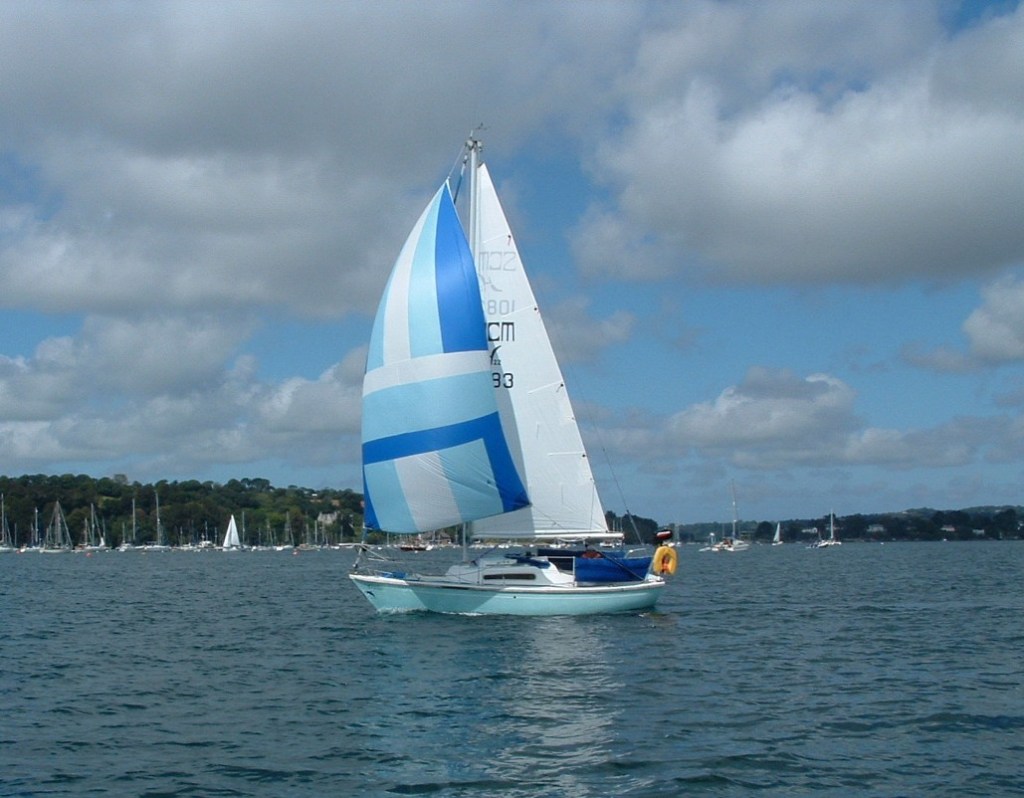
Old photo of Elektra pushed down to float off

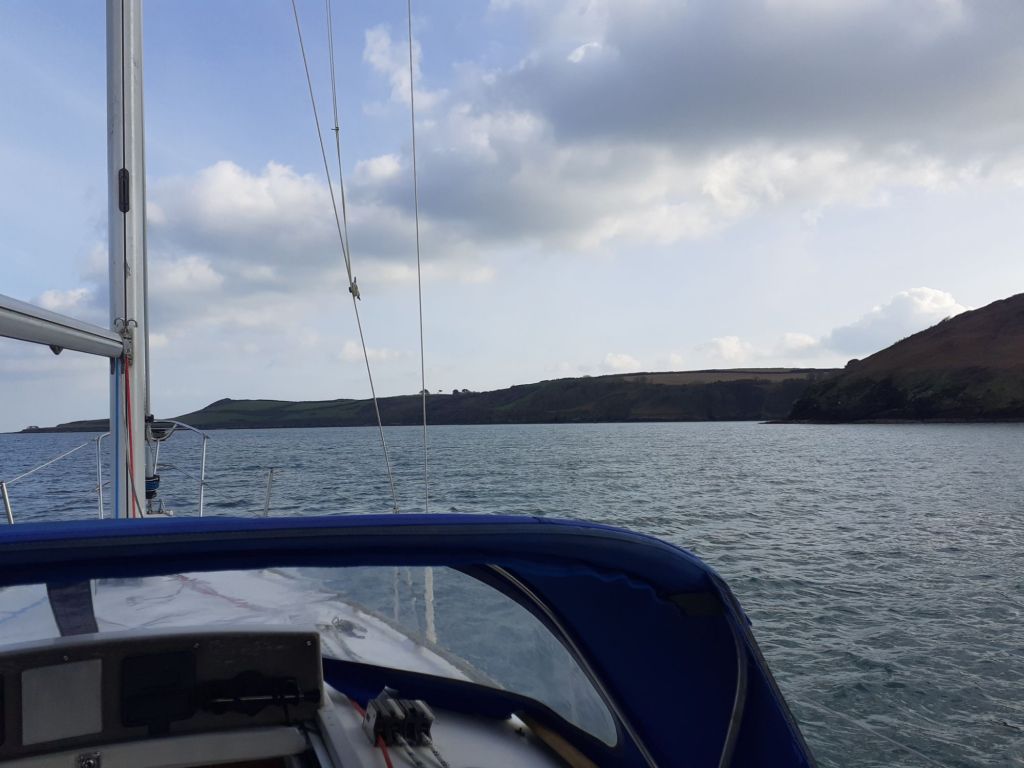
On Monday the 11th the yard pushed Elektra back out at low water to float off on the next tide. I had been working in the morning but arrived down at St Anthony about 1500hrs just as Elektra was getting her keels wet. I carried the punt down to the water, rowed out and climbed aboard. As tide tide neared floating height, I started her engine and removed the anchor from her bow to stow in the anchor locker as it wouldn’t be needed. Elektra floated off in about 3.6m of depth, I needed at least 4.6m to get back up river to her winter berth. So I motored her out of Gillan Harbour and around into Helford River to test the engine, It had seemed quite a mild day but out on the water it was chilly, I was glad I had my sailing jacket! I didn’t go far before turning around and heading back in, motoring up and picking a mooring up to wait for the tide. The boat yard were pulling out the trailer, I watched for about 15mins before dropping the mooring again and heading up river.

Motoring in Helford River

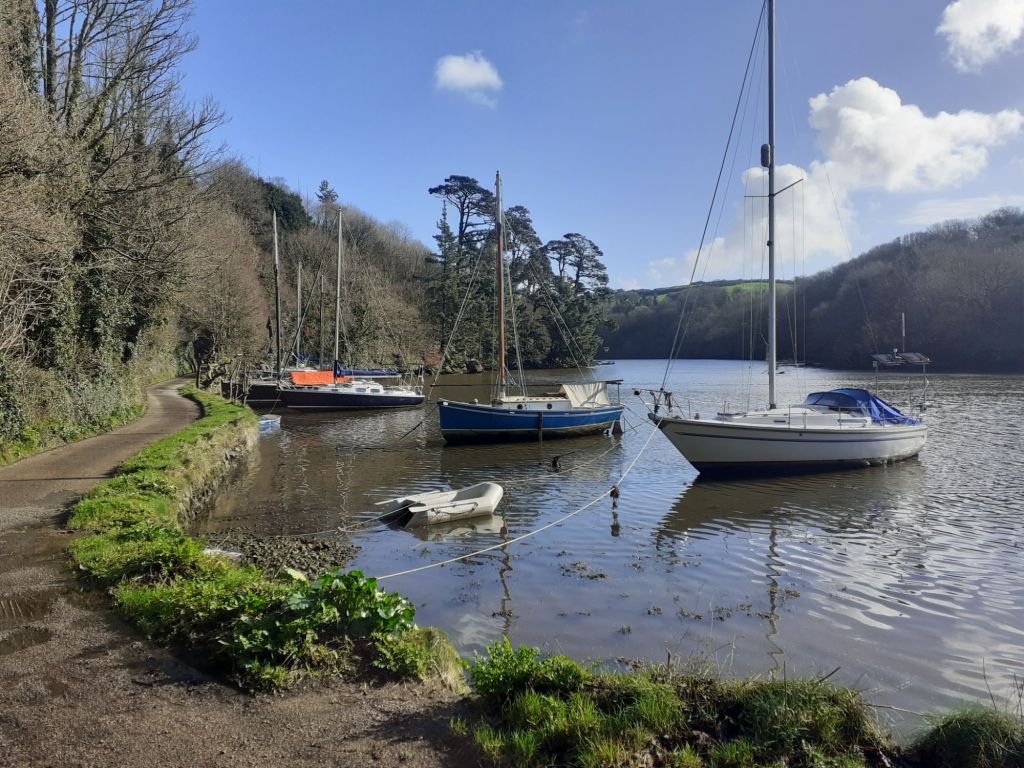
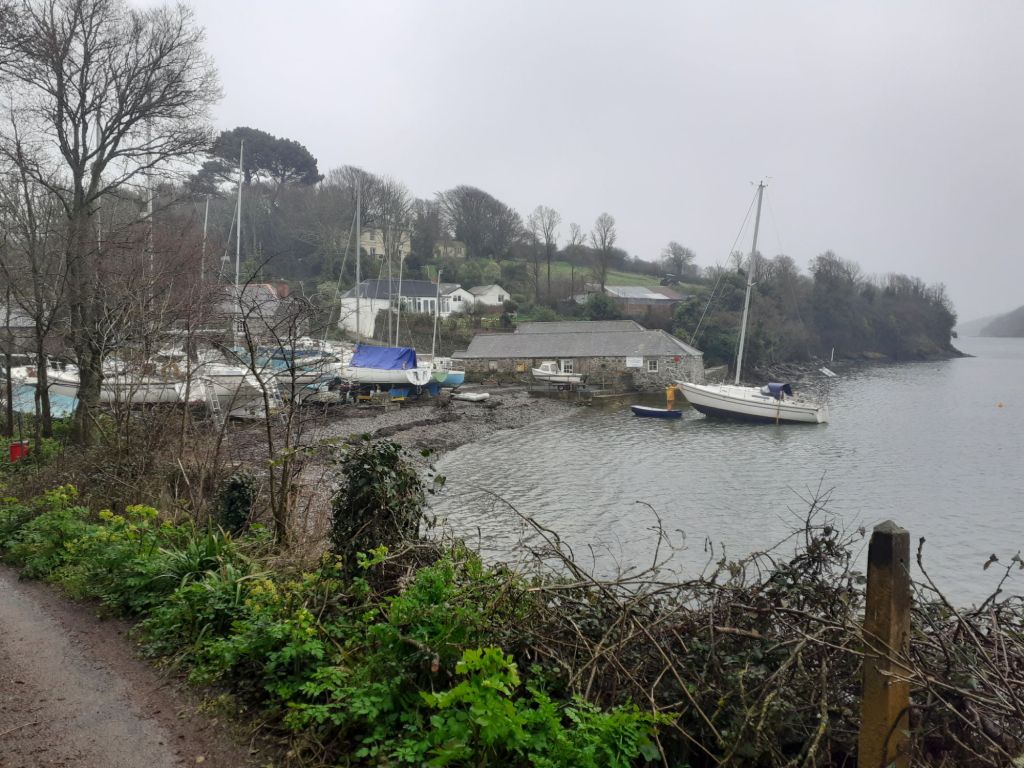
The time was about 1630hrs as I steered Elektra though the narrows between Gillan Harbour and Carne Creek, turning to port (the channel runs either side in Carne Creek with a level drying area in the middle). With 0.5m under her keels we slowly motored in, there is a bit of a dog leg in the channel just before Tregithy Quay, where the channel turns to starboard. The pole I had placed here just 12 days before was gone and I must have gone out of the channel as the depth was now 0.1m but I found the channel again as it got deeper. The next pole was still in place and the depth stayed the same the rest of the way until I turned Elektra into her berth, she came to all stop as her keels made contact with the mud. Still not yet HW, I picked up the bow mooring buoy and hooked the lines over the cleat, then I walked back aft with the port stern line in hand and made fast. Walking back the to bow I then took the starboard stern line aft and made fast. Back up on the bow I a just all three bow lines in turn and make off to the cleats. All these line where covered in mud and had made Elektra’s deck muddy, so I spent the next 30mins washing her decks again! Once happy, I locked up and got into the dinghy and pulled myself ashore via her mooring lines. Then I had to walk back to St Anthony to get the pick-up to drive home.

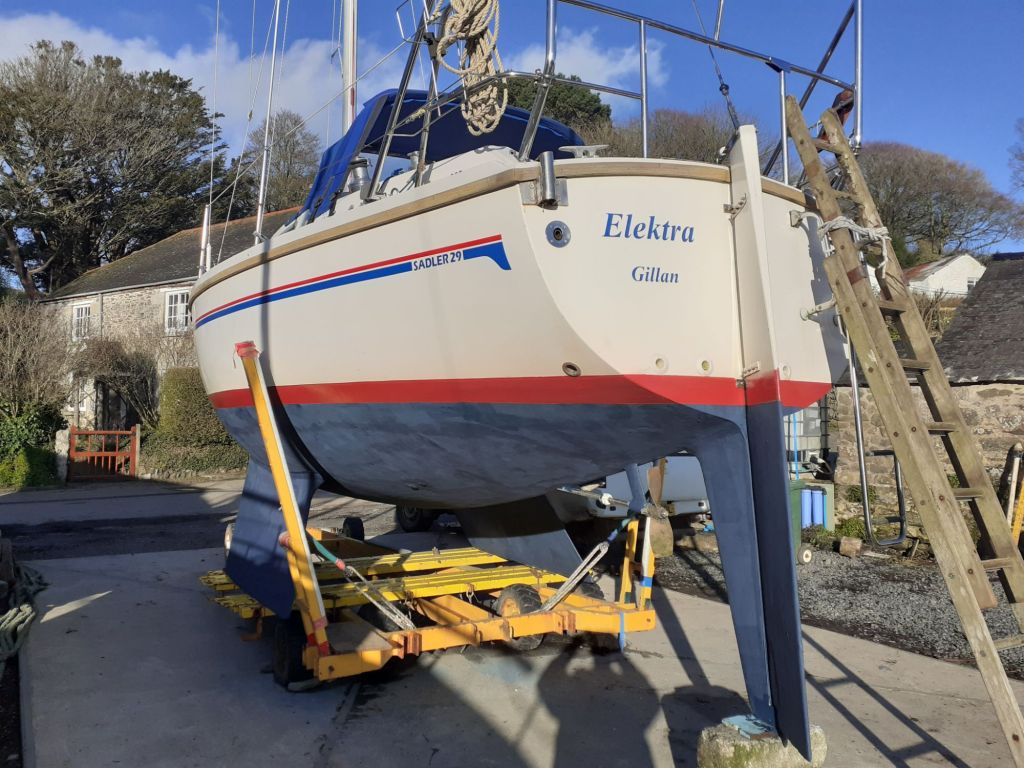
Elektra, comes out for antifouling

I had arranged with the local boat yard for Elektra to be pulled out, pressure washed, so I could give her a fresh coat of antifouling. A fortnight before I had pulled Elektra back down the creek sides into deeper water to make sure she would float when the time came to move her.

Elektra pulled back into deeper water

The day before I planned to move her, I pulled on my waders, I had cut 6x 12ft long Hazel poles to mark the channel, not really necessary as I know the channel but with poles takes away all the guess work. The channel bottom is fairly solid with 2-3ft deep mud banks rising up from the channel. Normally the channel at low water isn’t very deep but with all the heavy rain over February, it was deeper than anytime I had done this before. I used a line to tie all the poles together and pulled them down to the channel via a stream bed. Once in the channel I am glad to say they were floating so I only needed to get myself down the channel, stopping now and then to push a pole into the mud bank. Once I had used all the poles, I turned and starting walking back, the channel was about 2ft 6inchs deep and it was surprisingly hard walking back up steam against the flow! I was glad to finally get back ashore after my work out!

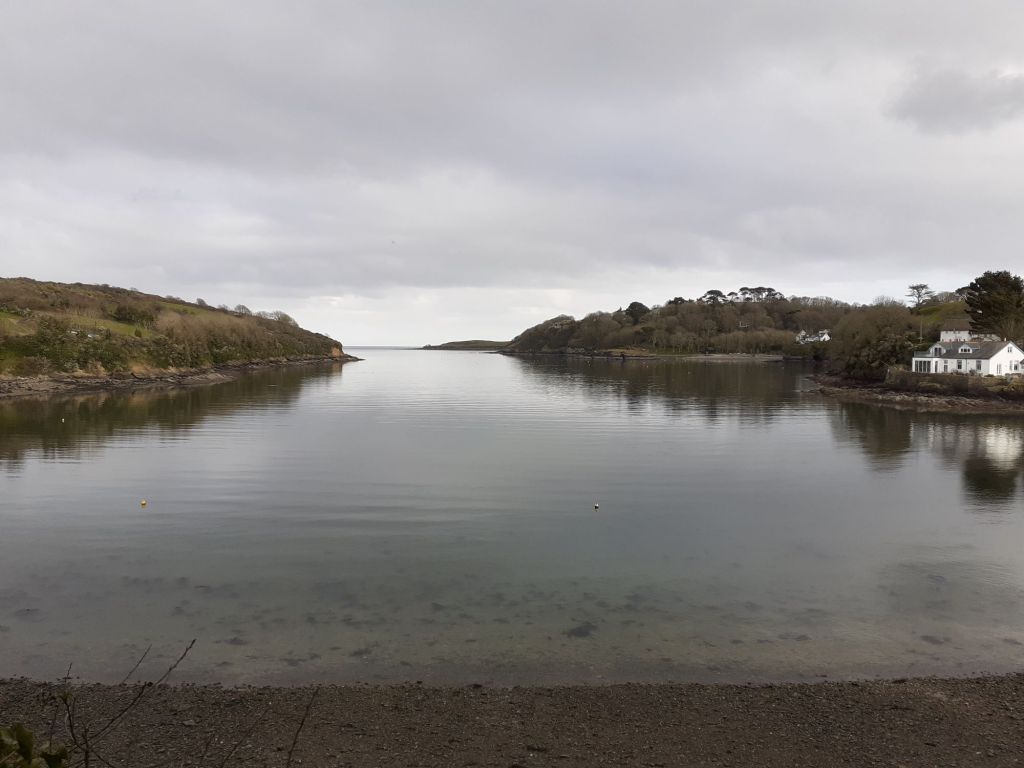
At 0630hrs the next day before first light I drove down to Elektra, she is just a mile from home, it was raining, so I was wearing full waterproofs when I clambered into the dinghy off the grassy bank and pulled myself out via her mooring line and climbed aboard. I linked the starboard stern line to the fore lines with the aid of an extra line from the locker. I started her engine and switched on her depth sounder. When I was ready, I dropped her fore and starboard stern lines and pulled Elektra out into the channel using her port stern line, as she past the mooring buoy on the end of the chain, I dropped the line overboard, Elektra continued astern into the channel, with the top of one of Hazel poles coming up quickly on the starboard stern quarter, I gave her a little forward thrust and turned her to starboard. I gave her a little bit more thrust and then knocked her out of gear to go over the lines of the other yachts moored in the creek, Elektra will continue for quite along way without any power on, once clear of the mooring lines I engaged forward again and turning to starboard, carried on down the channel, the least I saw on the sounder was 0.5m under the keel. Out of Carne Creek into Gillan Harbour the depth was 2.5m and I opened her up to motor around the harbour (I thought it’s just like Easter 2020, completely empty) not even the yard dory in the water.

After the trip around Gillan Harbour, I came back and picked up a mooring by the boat yard and scrubbed her decks with clean saltwater. I checked things were working and checked on the app to see the AIS was working, it picked Elektra up from halfway down Carne Creek so that was working too.

Empty Gillan Harbour

Now at 0830hrs there was activity at the boat yard, the tractor was being made ready and a rowing boat launched. Out comes the rowing boat with 4 big men aboard, two climb aboard, David gets in my 8ft punt and Dess rows off to the trailer where it was under the water. Dess signals he is ready, the lad drops the buoy and I motor Elektra across the harbour to line up with the trailer, Dess was standing in the rowing boat signalling directions, now lined but coming in a bit hot with the wind blowing from astern, there should have been 3 blasts on the horn as the engine was now running in reverse to slow her down! All was well as Dess was there in the rowing boat to catch her! The boat yards trailer is a bit basic, just a trailer frame with movable cross support beams fixed in place to take Elektra’s keels, two side arms. Once Dess is happy that Elektra is in the right place, he ties on a bow line, with the two lads holding the side arms from aboard and David check trailer under Elektra, Dess holding her bow, Shawn on the tractor is given the order to tow her out. Once on the trailer there no going back until the next tide, so has to be right!

I commented, why are you using the small tractor, I was told the battery was flat on the big tractor, but now Elektra is on the trailer partly out of the water, they could now put the battery back on after charging over night, they would be using the big tractor to tow her up to the pressure washing area. Dess ferried me ashore, I had to walk back to the pick-up parked at Carne, I was back home by 1000hrs for breakfast.

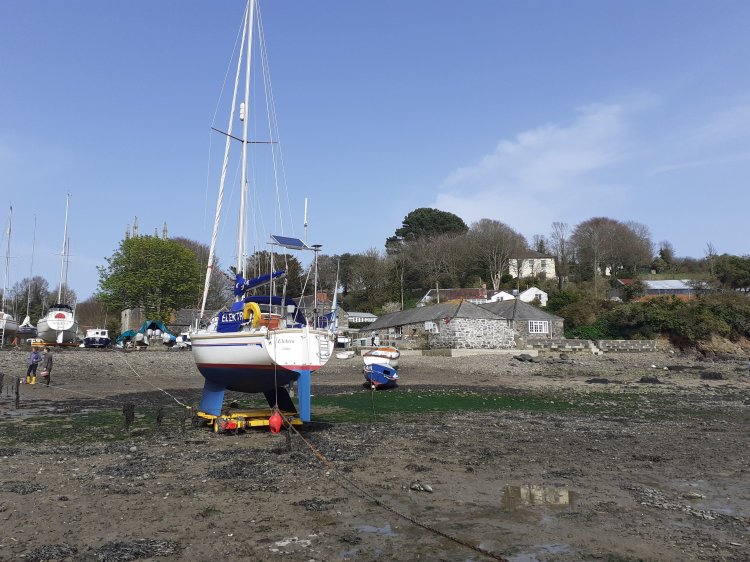
Elektra on the trailer

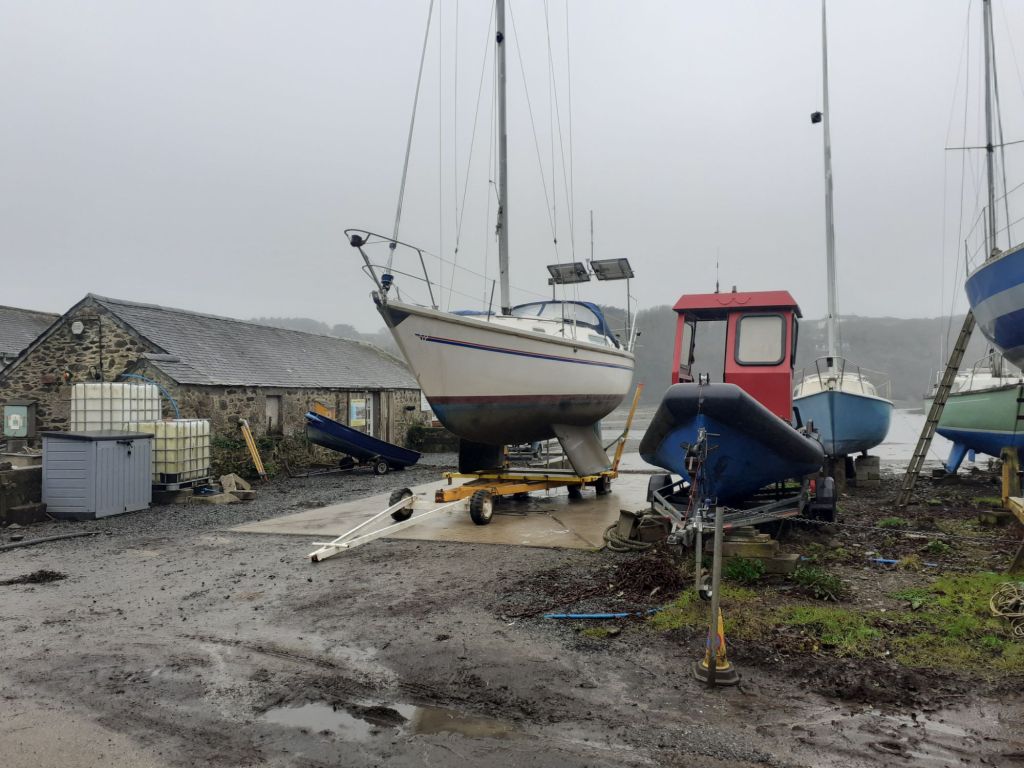
Later that day l went back to St Anthony, on the way l stopped at Carne to retrieve out of the mud the port aft mooring line l had dropped over the side earlier. At St Anthony Elektra had been pulled up onto the concrete for pressure washing.

Elektra ready for washing

How I got into boats and sailing

As a family we had always holidayed in Cornwall in a village near the Helford River where my Mum had been brought up, her father was a farmer. I had learnt to swim very early in life. My Mum and Dad were both teachers realised early, I didn’t have the brains to be a teacher (later I realised I have dyslexia, but a bit of an unknown then) and encouraged me into using my hands, to this end in the winter of 1972 when I was 12 dad and I built a 8ft “Scamp” sailing dinghy which had just a mainsail. The following summer on holiday in Cornwall, dad pushed me out from the shore at St Anthony and I learn to sail the hard way by finding out what worked and what didn’t! That summer I realised I really liked being on the water instead of in it, I sailed this dinghy during holidays in Cornwall for a few years but it was small so over the winter 1975-76 I built a “Embassy” 11ft sailing dinghy. I sailed this for 18 months before selling and buying a second hand “Enterprise” 14ft sailing dinghy which I refitted.

   The only photo I have of myself kayaking sometime between 1978-82

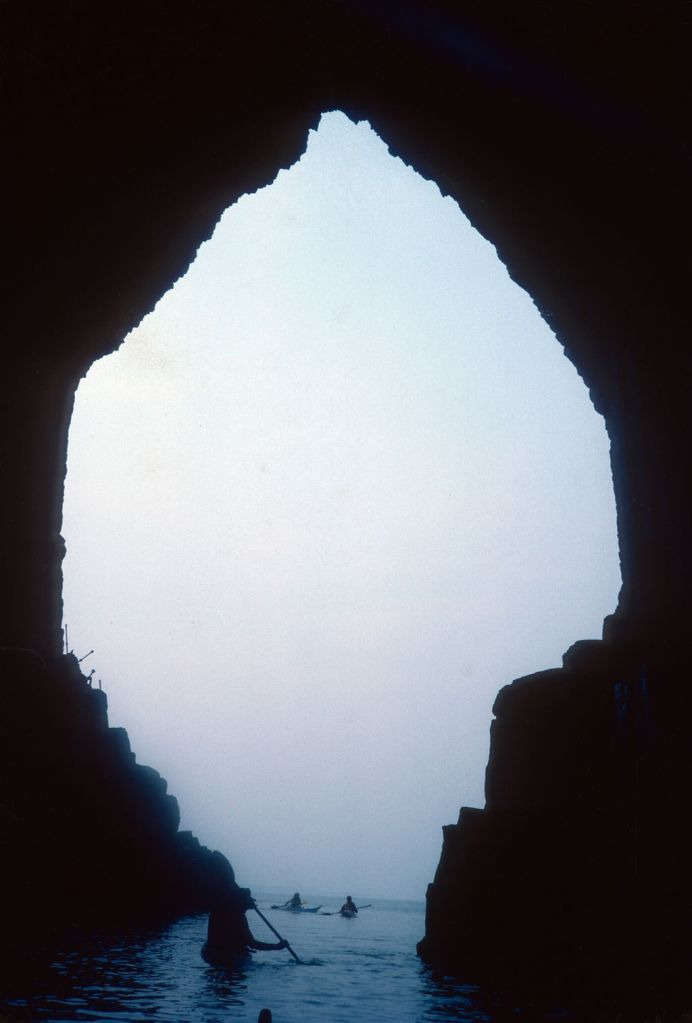
In the summer of 1976 I left school on Friday and starter work on following Monday as an apprentice carpenter, 3 years (a year of sweeping up and making tea, followed by a year of handing tools) Then in the final year the boss thought I was trained enough to proper work! In realty, I didn’t really learn until after I had done my apprenticeship when I had real responsibility. In 1976 I was still sailing but by 1978 I had got into sea kayaking and living in Scotland the islands of the west coast were close enough to get to most weekends. In 1978 I bought a new GRP “Baidarka Explorer” and though the next 5 years I paddled it over 4000nm, this was my first experience of navigation. We carried OS maps which we coved with clear sticky backed plastic on our fore decks held on by shock cord. We had a fixed compass forward of the map. We would work out all tide drift and streams before leaving on passage and paddle a bearing taking them into consideration, as ongoing navigation wasn’t possible. We would go paddling with Paisley Kayak Club, normally a group of 3-5 but sometimes more (it wasn’t safe to go paddling alone). We were self sufficient, carrying everything we needed, tent, stove, fuel, pots, food, water, etc, We carried flares, first aid kit but these were the days before mobiles, we could of carried a handheld VHF but these were the size of 2x house bricks on end with an antenna of the same length again (although available, I didn’t know anyone who owned one). I expect I would have continued kayaking but I moved to Cornwall in 1982 and almost no one was sea kayaking here back then.

  This photo was taken by me from inside Fingal’s Cave, Staffa in 1982

So in the summer 1983 I launched my “Plymouth Pilot” 16ft “Sara May” (I bought hull and deck in 1978 and fitted out) inboard motorboat for fishing, she was moored at St Anthony, but soon got fed up with fishing! I took up windsurfing in 1984, that was OK but I did wonder why I had given up dinghy sailing. Then in 1986 I got married, my wife came from a local farming family and liked cattle, so we had a small holding and kept Hereford cows and caves until 2000.

When my wife left in 1998, I just worked all the time until 2 years later getting into golf, I played for about 10 years, loved the game but I had met my second wife Vicki by 2004 and she moved in. We wanted something we could do together, so I suggested sailing, Vicki hadn’t ever done any but had been on a lot of canal holidays. We hired a “Wayfairer” from Sailaway St Anthony 3 or 4 times that summer and Vicki loved it, before buying a little Bradwell 18ft day sailor called “Acorn”, around August of that year. It was a great little sailing yacht but we soon realised we needed something bigger to go cruising. “Acorn” took lots of years to sell, she sat on her trailer in our back garden until March 2010 and was bought by a guy who drove down from Scotland.

           “Gala” taken in the summer of 2011

In September 2005 we bought a fin keel Hurley 22 which had a road trailer from Emsworth called “Gala”, I towed her home to Cornwall which took 11hrs as she was very heavy for her size. I did an RYA day skipper and RYA DFC Radio courses over the following winter. “Gala” was a proper little sailing yacht, built like a brick shit house, she was very stiff and needed the top end of a force 5 before thinking of reefing. We cruised her between Dartmouth to the east and Scilly in the west, she took us safely to and from Scilly 3 times over the 11 seasons we owned her and we logged over 5000nm, only the limits of my job had stopped us from going further (I only had a max of 9 days before I needed to return to work) We had been looking to buy a bigger yacht for a few years but it took a while to find the right one. I sold “Gala” in July 2017 and she went to South Wales on the back of a low loader.

  ”Gala” the day before she left us for South Wales on the back of a low loader

The definition of BOAT is Break Out Another Thousand.

In November of 2016 we bought “Elektra” which is what this blog is about.

          ”Elektra” in Carrick Roads summer 2023

Photos from 2023

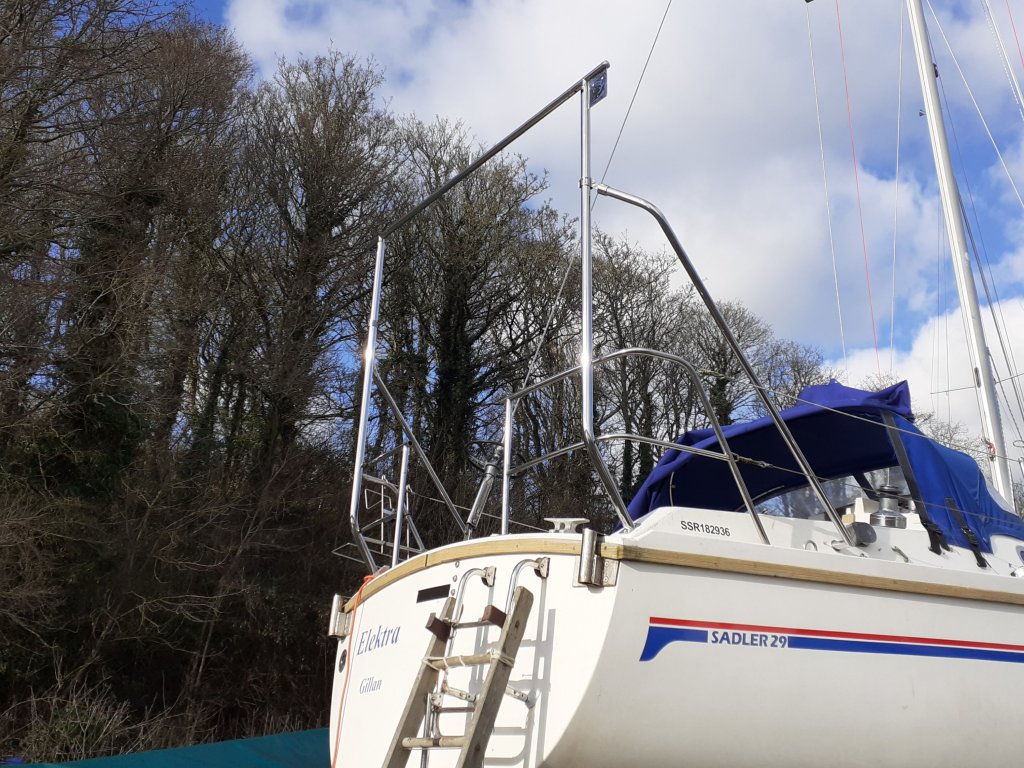
January, fitting Elektra’s new stainless solar and antenna frame
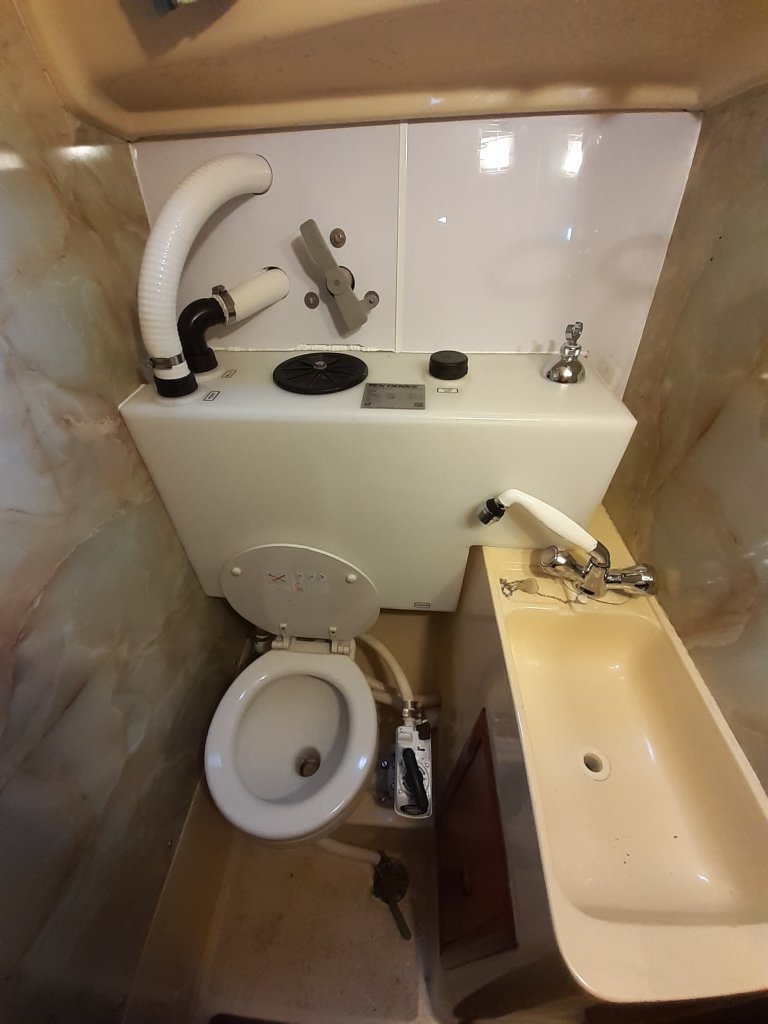
February, the new black water tank is fitted
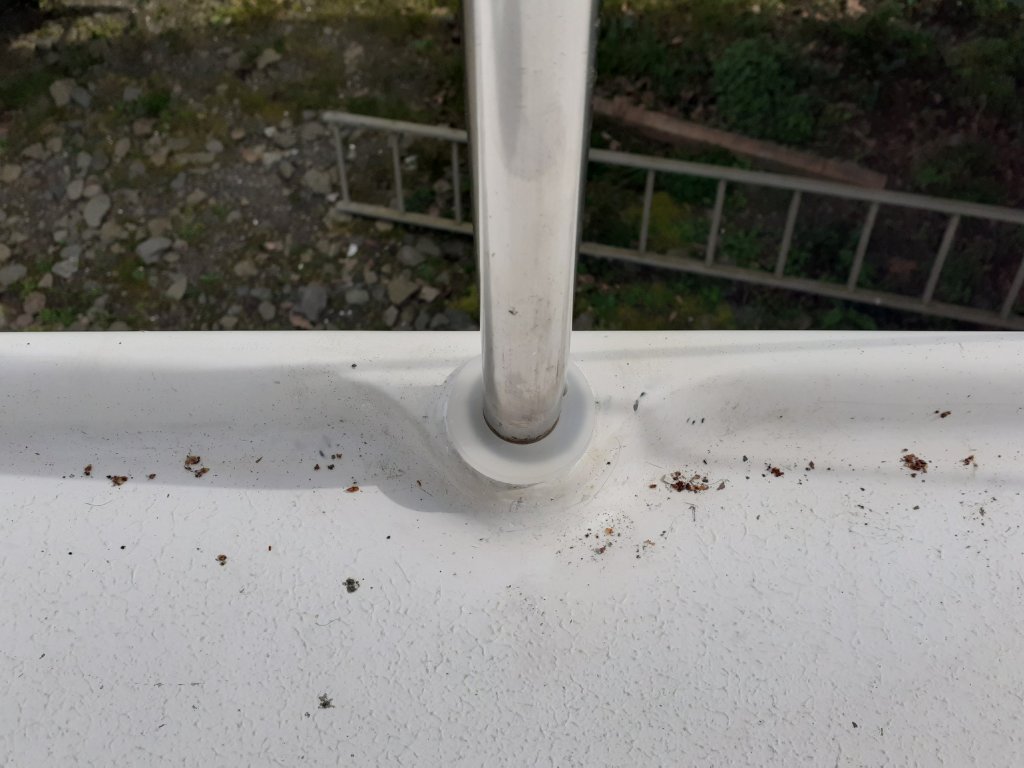
March, fitted new stanchion inserts
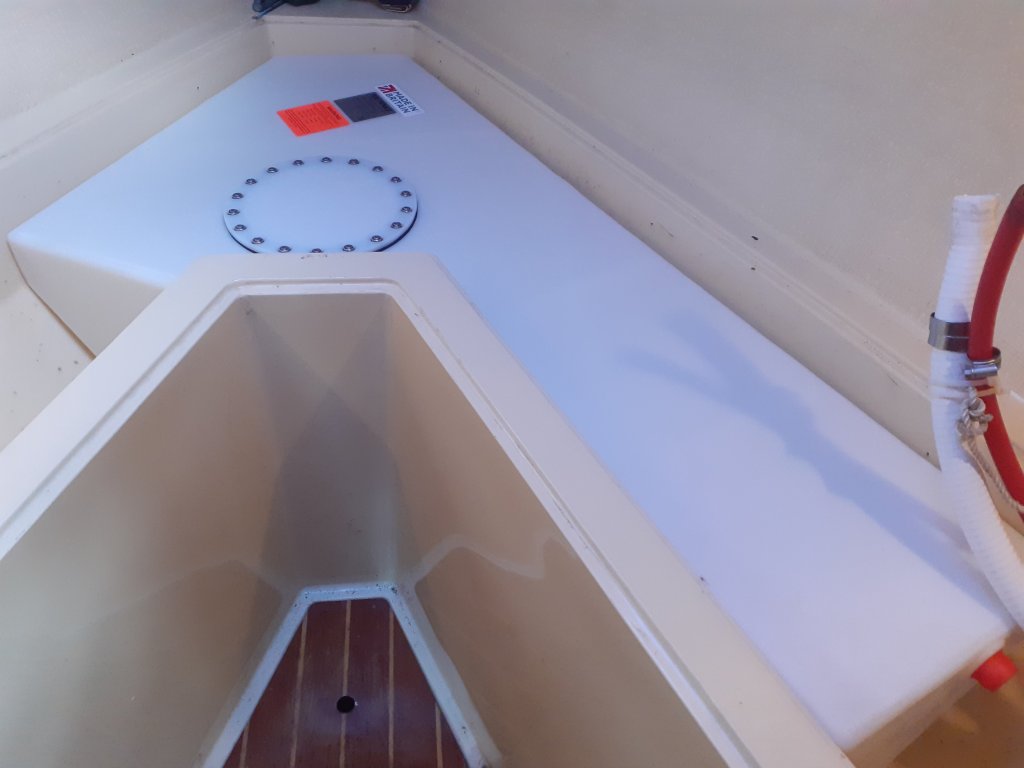
April, fitted new water tank
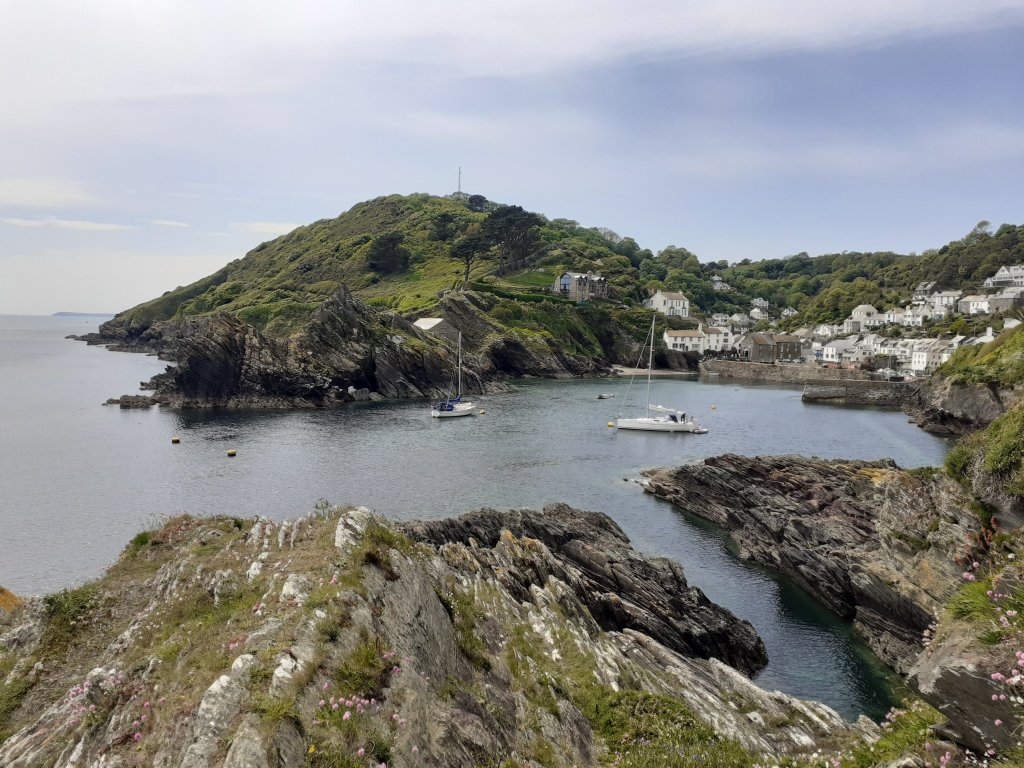
May, still early in the season but this was our 2nd weeks holiday, Elektra on left, in Polperro outer harbour
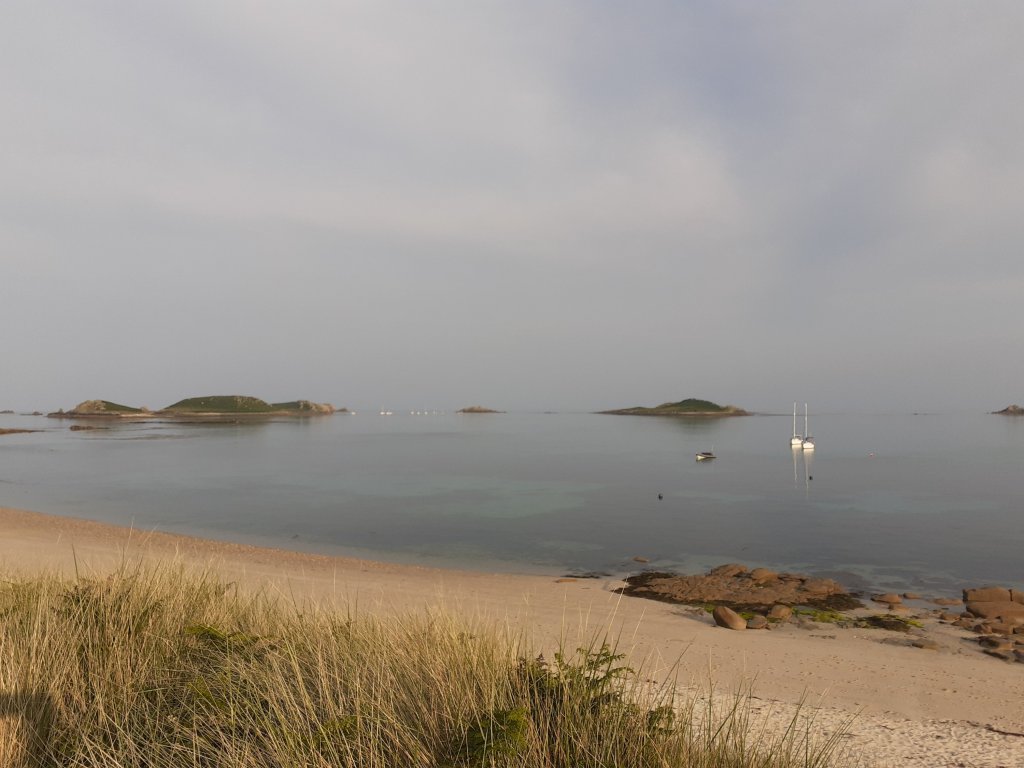
June, we were lucky to have 2 wonderful weeks in Scilly with wall to wall sunshine 🌞 Elektra seen here anchored south of St Martin’s with Eastern Isles in back ground
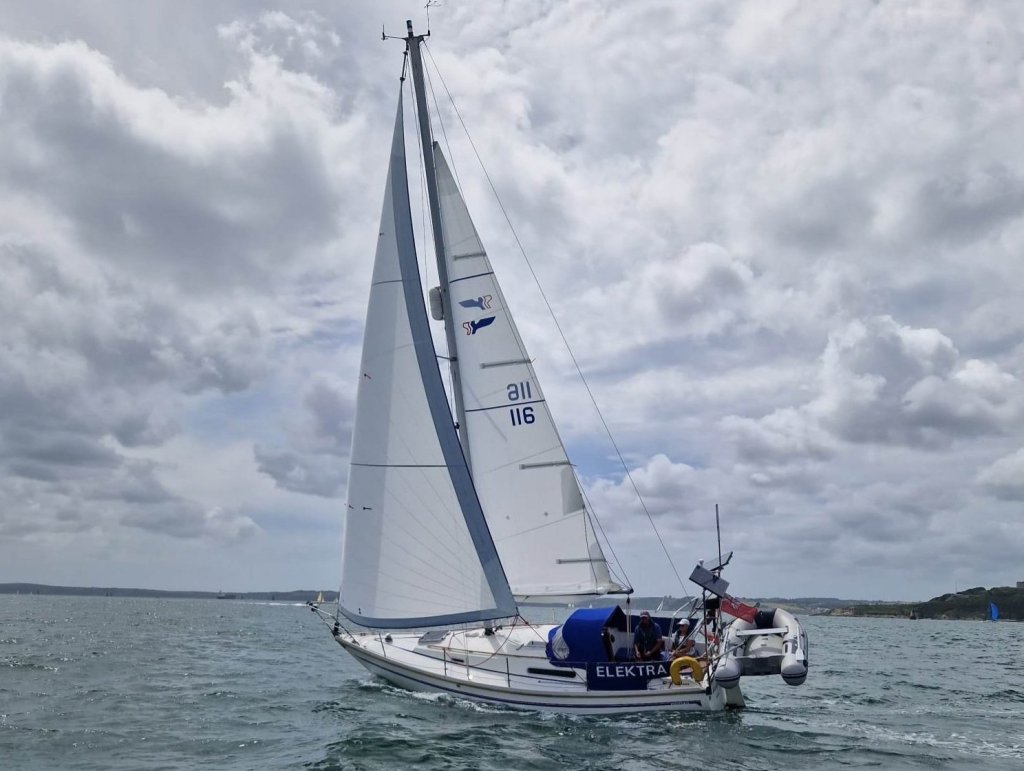
July, a sailing friend Kevin shot some excellent photos of Elektra in her element 😀
August, some great sailing between the gales
September, another week aboard and more sheltering from strong winds
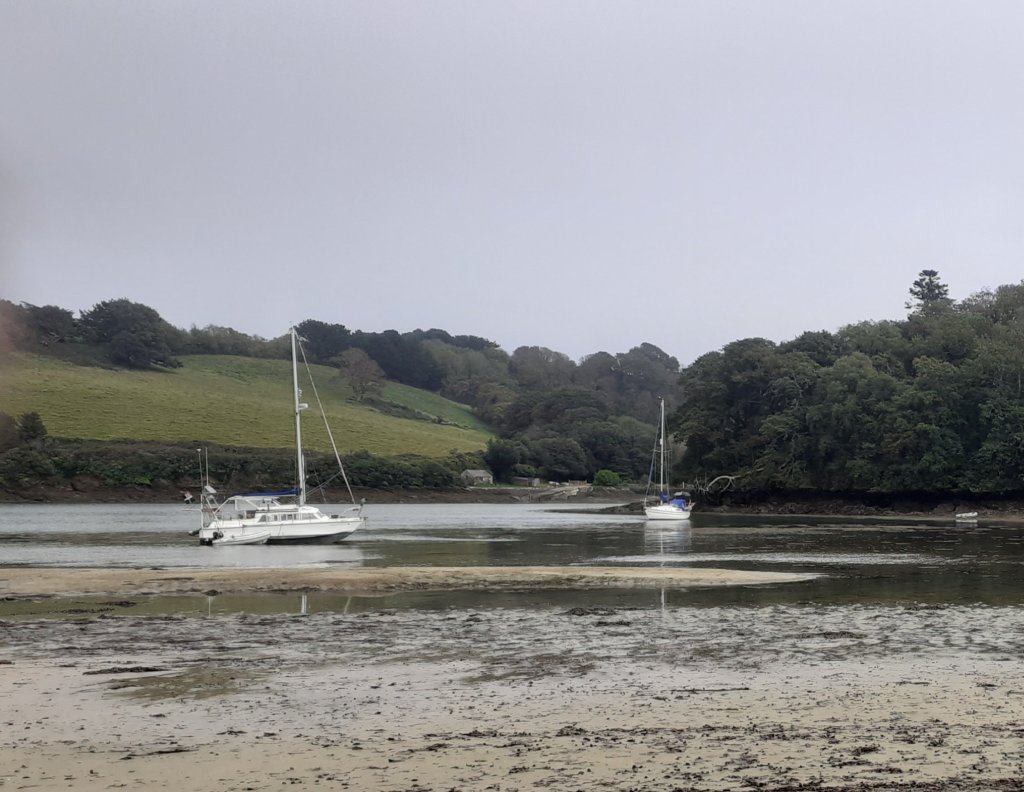
October, we lay up Elektra early due to a big easterly blow which was forecasted, this winter Elektra returned to Carne Creek
November, now safe we spent the dry days removing gear, sails and canvas work.
December, winter has arrived, fitted her winter sprayhood and cockpit cover

Flexiteek Trims

I had been over to Neal at Kernow Covers to pick up Elektra’s winter cockpit cover, Neal had the cover all summer but hadn’t got around to doing the work needed, he had agreed to do as I waited as he needed to check with me what was needed.

Neal at work on Elektra’s winter cover

The forecast was for heavy rain, I had planned to replace the cockpit trims and was glad to get aboard before the rain came in. As it happed the rain didn’t come in before 3pm, I could have worked elsewhere but once I had started this job I was going to finish.

Flexiteek trims

All went well and having done the job the day was still dry so I removed the cockpit encloser, frame, dodgers and the seasonal sprayhood, replacing with the winter sprayhood before the rain started. Then zipping in the winter cockpit cover I was beginning to get wet. I decided to leave all the canvas work aboard to avoid it getting wet. I made my way forward to the ladder only to find it had fallen and was lying in the water beside Elektra. On the plus side I had attached the dinghy so I could get off via the stern boarding ladder using the dinghy.

Winter has started!

I was down to Elektra a few days later to remove the boom and some halyards. With all the wet winter weather most lines and running rigging goes green so l try to remove as much as possible.

Removing sails

On Sunday 22nd October at 1200hrs with a forecast of dry weather Vicki went down to Elektra to remove her sails and fold up for the winter. Vicki isn’t very able these days, getting down to the creek bed from the road she nearly fill in but I managed to save her, she wouldn’t have been happy if she had got wet.

We used our old Quicksliver 2.3m roll-up to get out to Elektra who was aground and hadn’t floated at high water just an hour before, using the bow lines and then Elektra’s gunnel to get us to her stern and boarding ladder. Once safely aboard we set about taking the sail cover and mainsail off. Vicki working from the cockpit removing the reefing lines and battens, while I removed the luff sliders from the mast grove and the foot from the boom. Vicki hadn’t seen the new battens and was having problems so we did them together after I found the batten tool (a short piece of batten) to release the Velcro, it was a bit of a fiddle but at least we hadn’t lost any battens during the summer. Our old Jeckells mainsail lost the bottom batten every year from 2017 we had lost 4 old battens and one which I made by 2021, in 2022 I didn’t bother putting the batten in! I like Crusaders Sails way of fitting the battens.

With it being a dry day we were able to fold up the sail on Elektra’s coach roof, then it was the turn of the genoa, a lot bigger sail and more of a problem to fold up but we did it eventually! And in the dry, just after we finish it tipped down with rain but by that time the sail was in the bag, few! We sat down in the saloon while it rained, I am glad to say it was short lived and stopped again 5mins later. We packed up some more stuff we didn’t need aboard over the winter.

Sails removed, cockpit enclosure up for work aboard in rain

We then put up the cockpit enclosure, for tomorrow with heavy rain forecasted I am going to finish off the cockpit Flexiteek trims. Then I got down into the dinghy and took the sails bags and other bags from Vicki to ferry ashore, with the sea level only a foot or so deep. Only getting to about midships before going aground. I unloaded the bags from the dinghy to a dry stony area of creek bed and went back for Vicki. It was a long drop down for Vicki from the bottom of the ladder, I think she nearly fell in again, complaining about me moving the dinghy but she saved herself by hanging onto the bottom of the ladder. It was a short trip, about 10ft before we had to get out again, lol, it was less about the depth of water and more to do with the depth of mud under the water! Once we walked up to the side of the creek, I made off the dinghy to one of Elektra’s bow lines and climbed up onto the road to help Vicki up, then jumped down again to lift the bags up. We then loaded the pick-up and drove home.
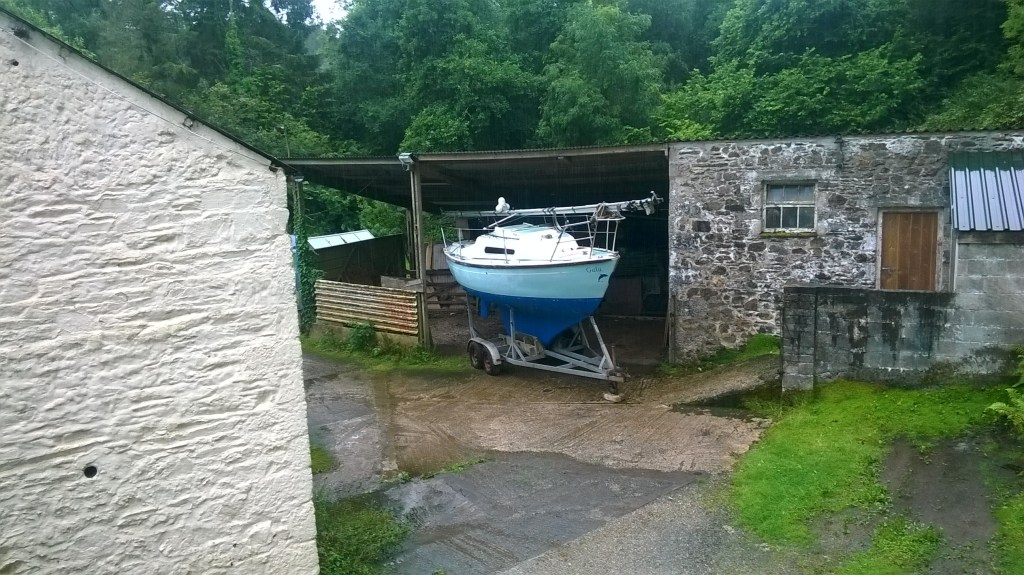
Summing up for 2023 Season

I spent lots of time and money getting Elektra just as we wanted her, January though to end of March, new bespoke solar stainless frame, new black water tank, 2 new 80W solar panels, new push-pit gate, all new running rigging, unused new sails from 2022, etc, the list goes on.

Elektra’s new solar frame and panels

Elektra was launched on the 5th of April. The plan had been to sail more having semi-retired by working one week and having the next week off. That had been the plan but the weather didn’t play ball. In April, it nearly rained non-stop, I might of been doing half as much work but it was taking me twice as long to do! So with only one day sail in April, it was the last weekend of April we went aboard for a week, 28th to 5th of May. This week was very cold so we stayed local. We were aboard again 13-20th of May with much better weather we sailed east to Fowey and then Yealm River staying for a few days, our last visit had been back in 2018. We came back via Cawsands, Polperro and Lantic Cove.
Polperro

Our first weekend wasn’t until June, by that time we had already taken 2 holidays. The weekend was spent on Elektra’s gale proof mooring in Carne Creek because of the strong east winds. I had spent the week before changing all her batteries, fitting a new cooker and renewing the companion way non slip steps. Then between the 9-22nd of June we went to the wonderful “Isles of Scilly”, this was my first summer holiday longer than a week for 35 years and wow, fantastic weather!

Scilly

We came home again just before the weather broke, from then on the summer was wet and windy and we never left the Falmouth area but we still managed to get 3 more single weeks aboard mainly sheltering from the poor weather. This season I also had lots of day sailing in between gales.

Sheltering from another gale

In early September there was a nice spell of hot sunny weather, I was hoping the summer had come back but it didn’t last and went back to the wet and windy weather. We laid Elektra up on the 14th of October before the next big blow came though.

Laid up on her winter berth

The numbers are, we had 85 days aboard, 58 nights aboard of which 48 were at anchor, Elektra dragged her anchor once, this being the 4th time she had dragged in 7 seasons having anchored 240 nights. We sailed for 50 days and logged 585nm which isn’t much for the time aboard but we were quite often dodging gales, so short passages to find shelter.   

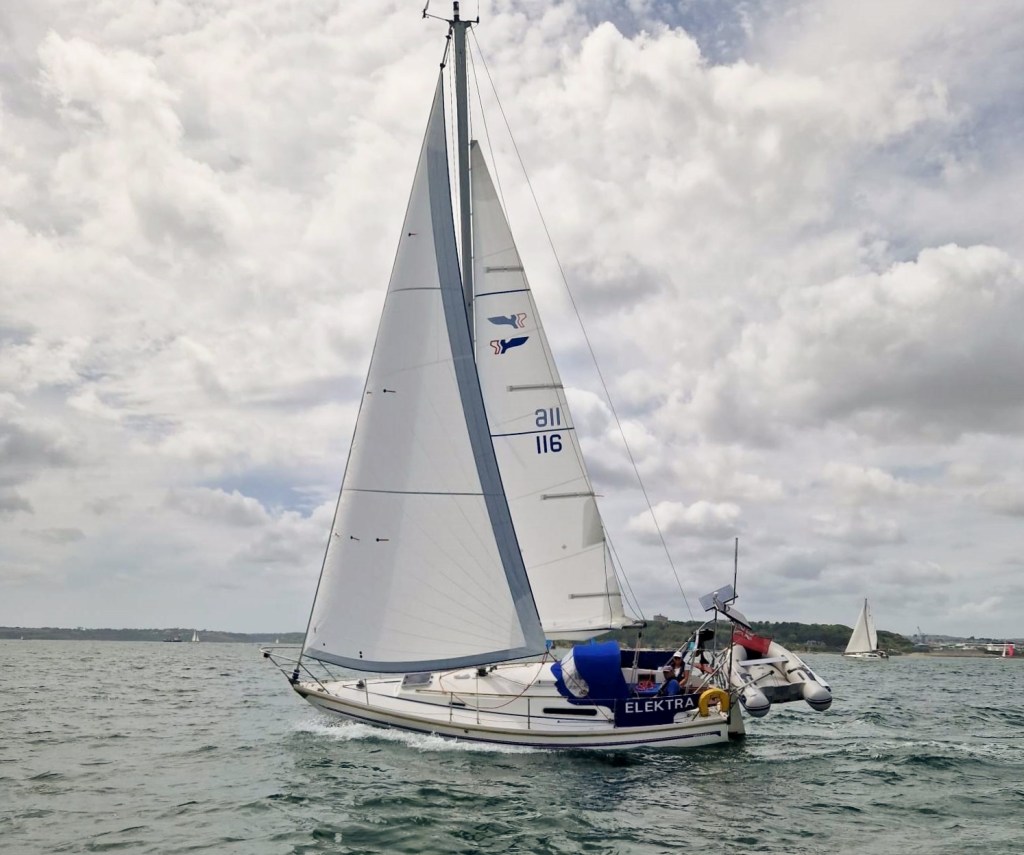
Great photos of Elektra sailing well, thank you Kevin Mitchell