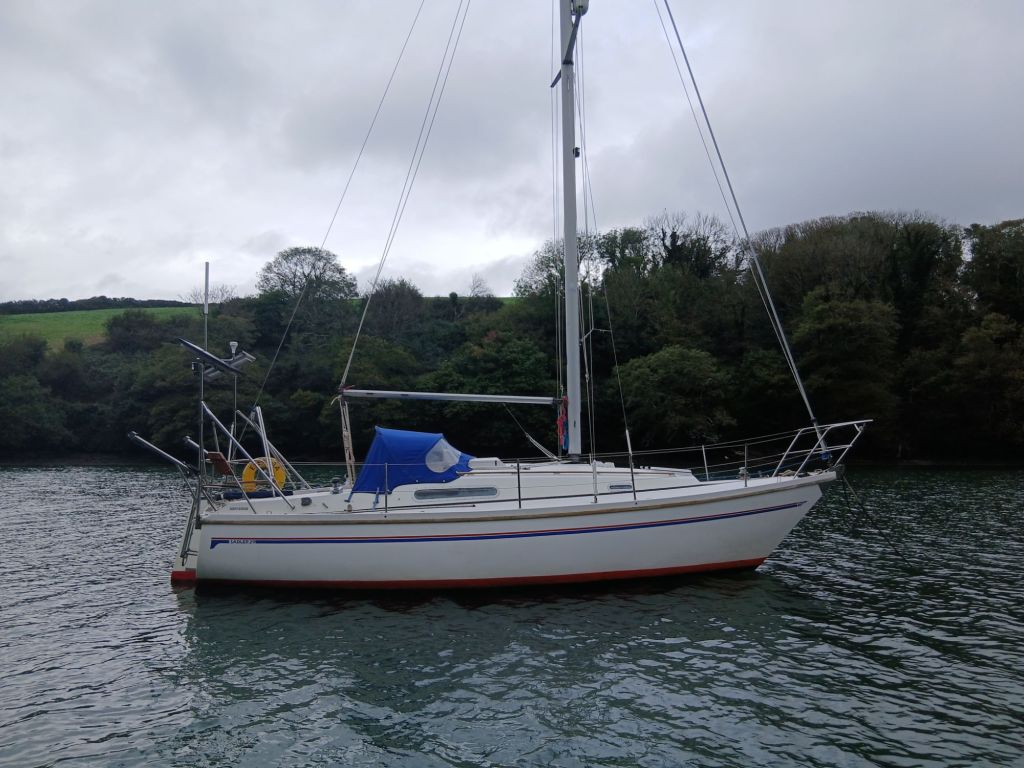
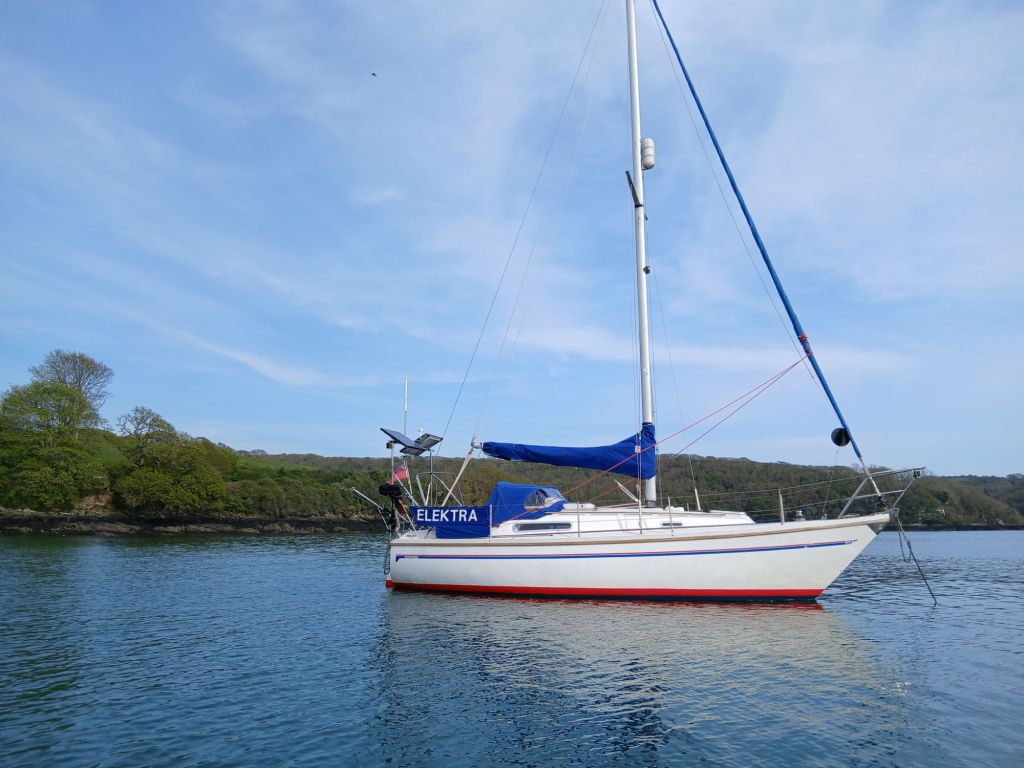
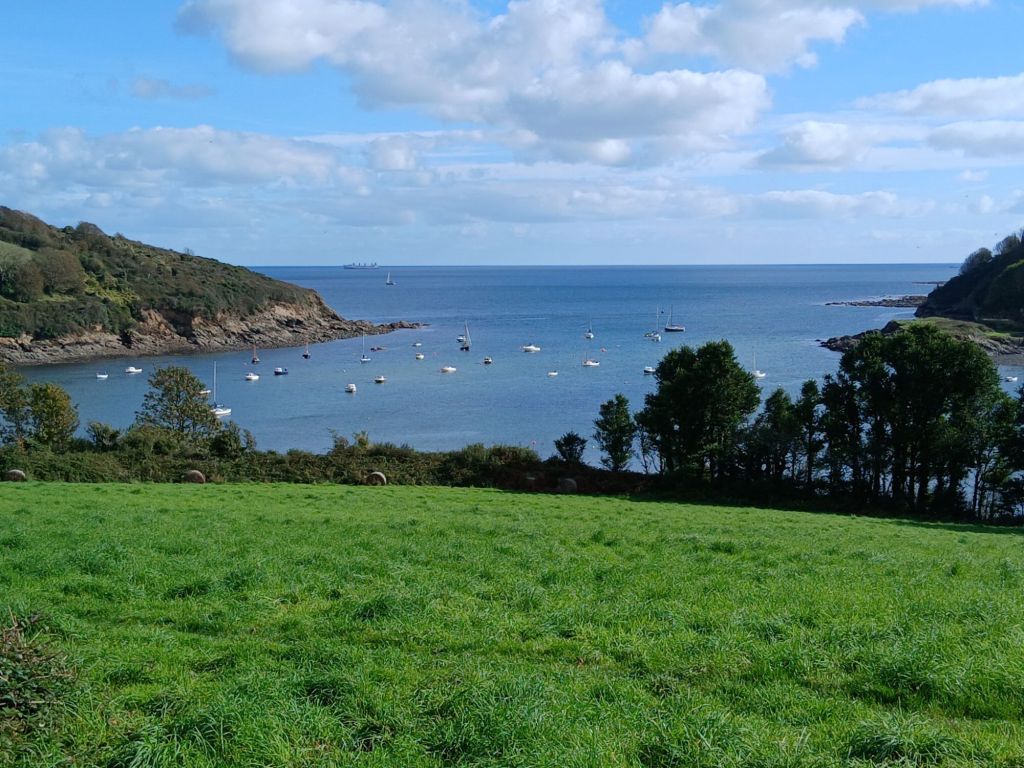
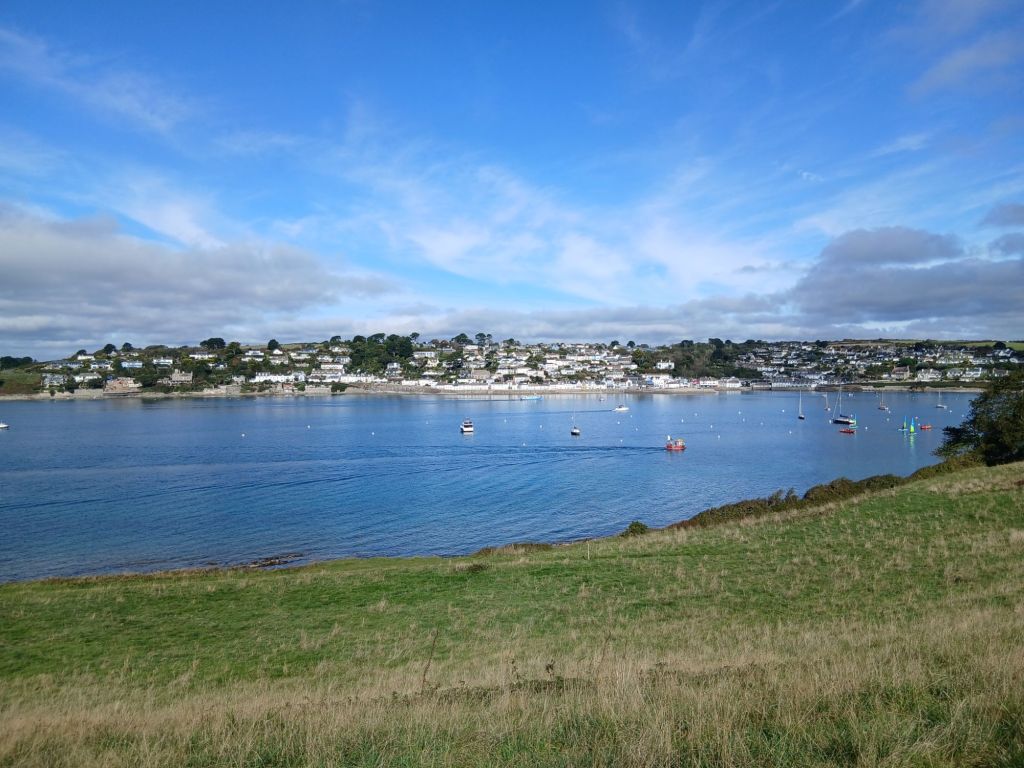
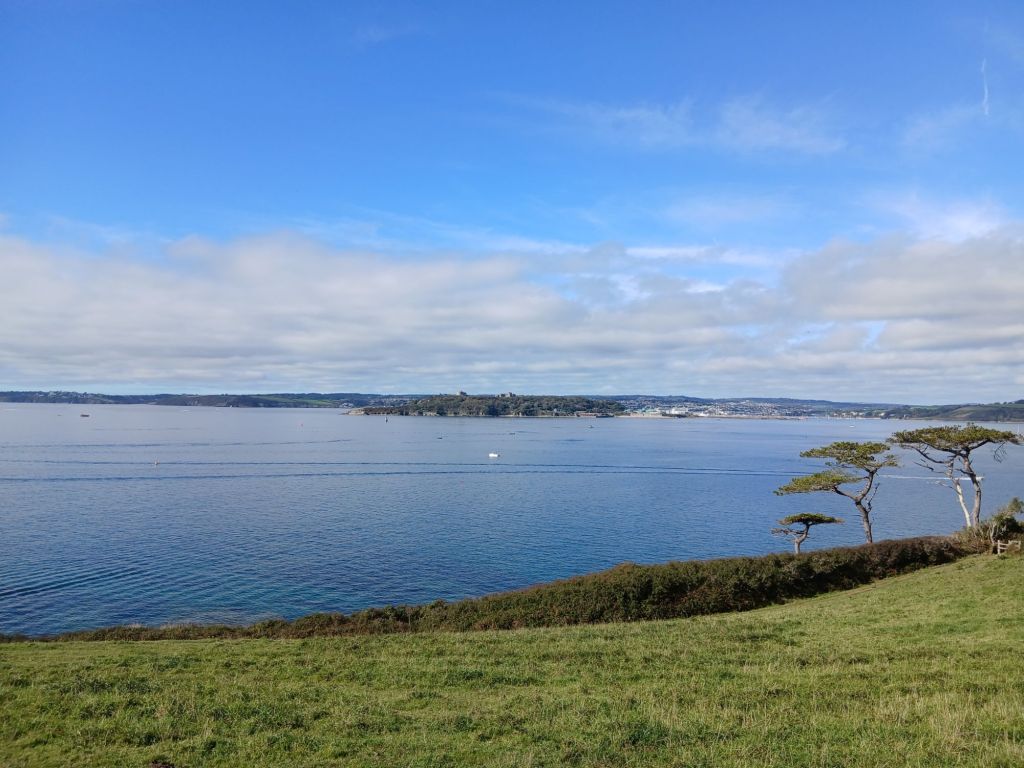
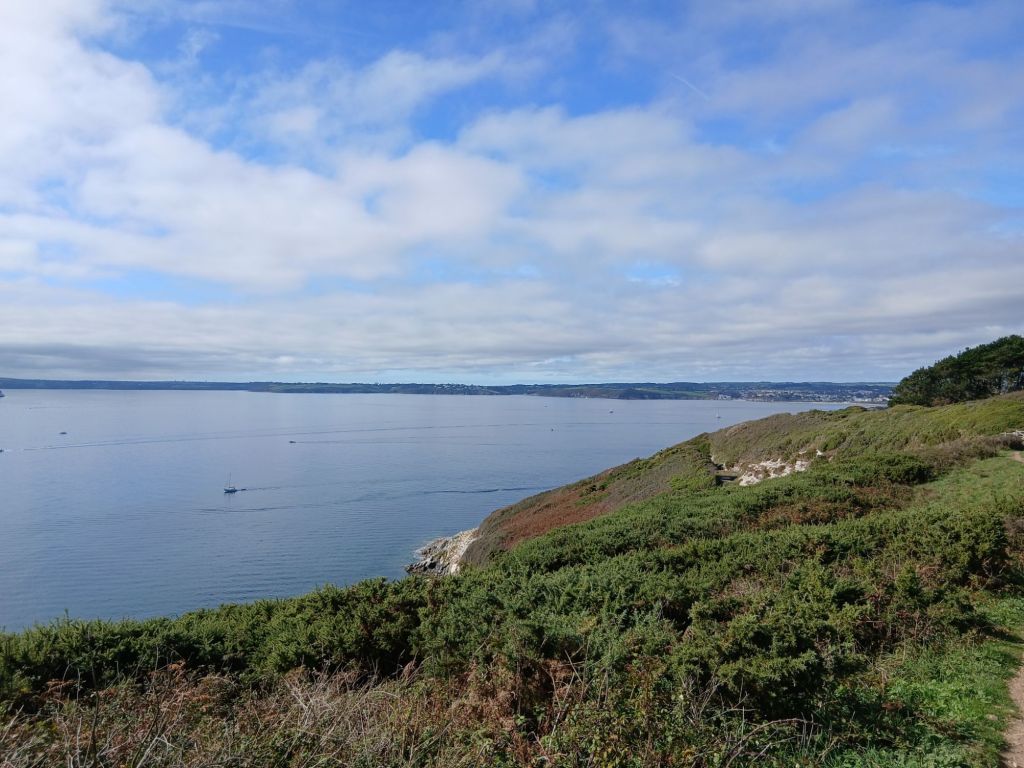
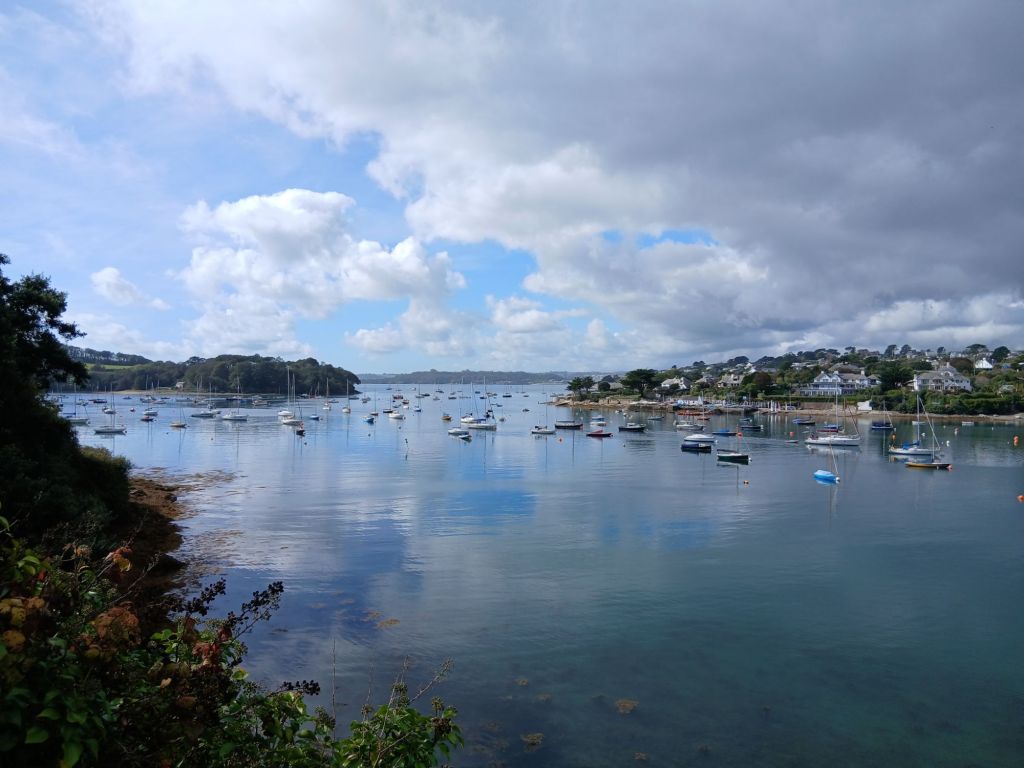
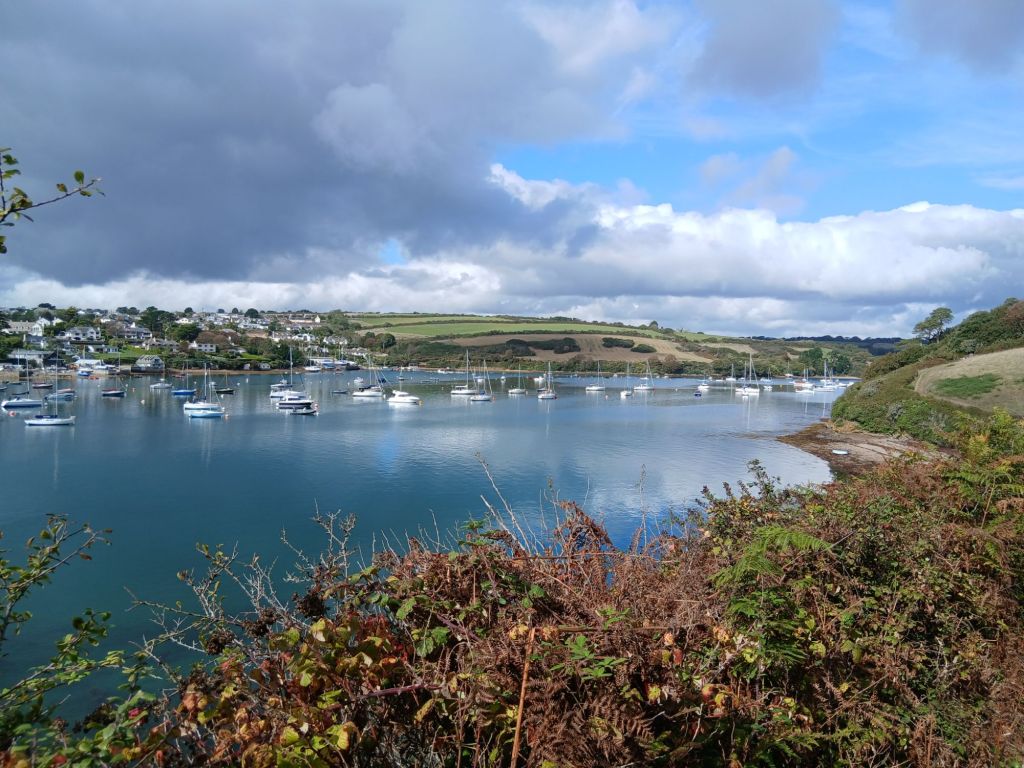
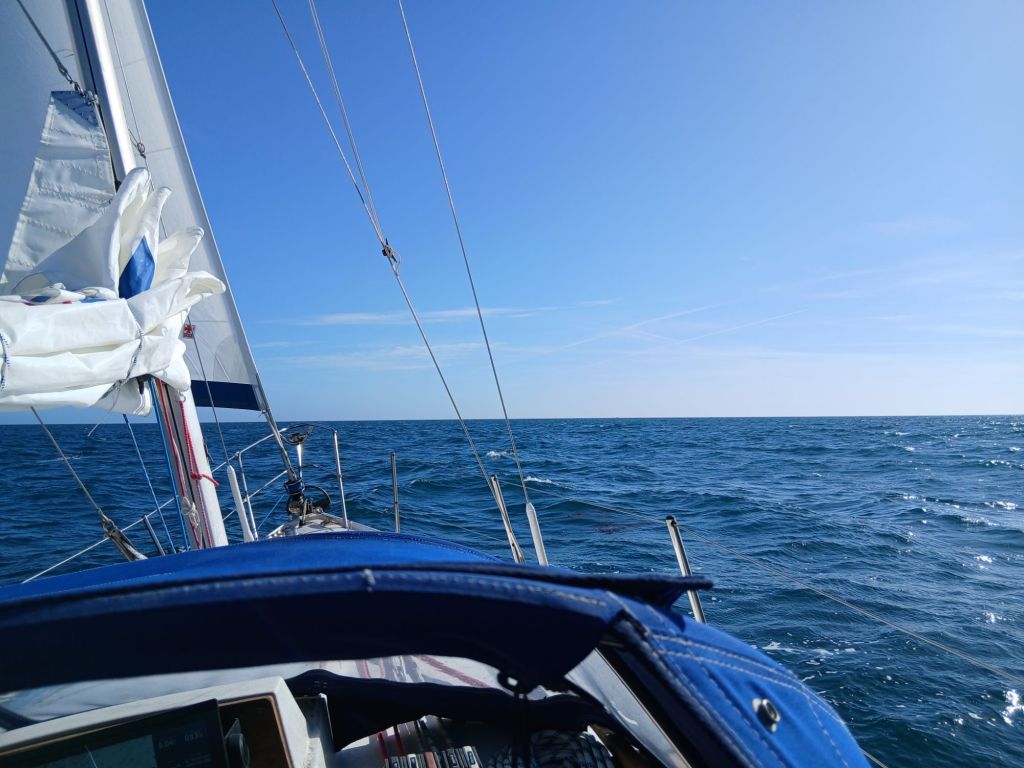
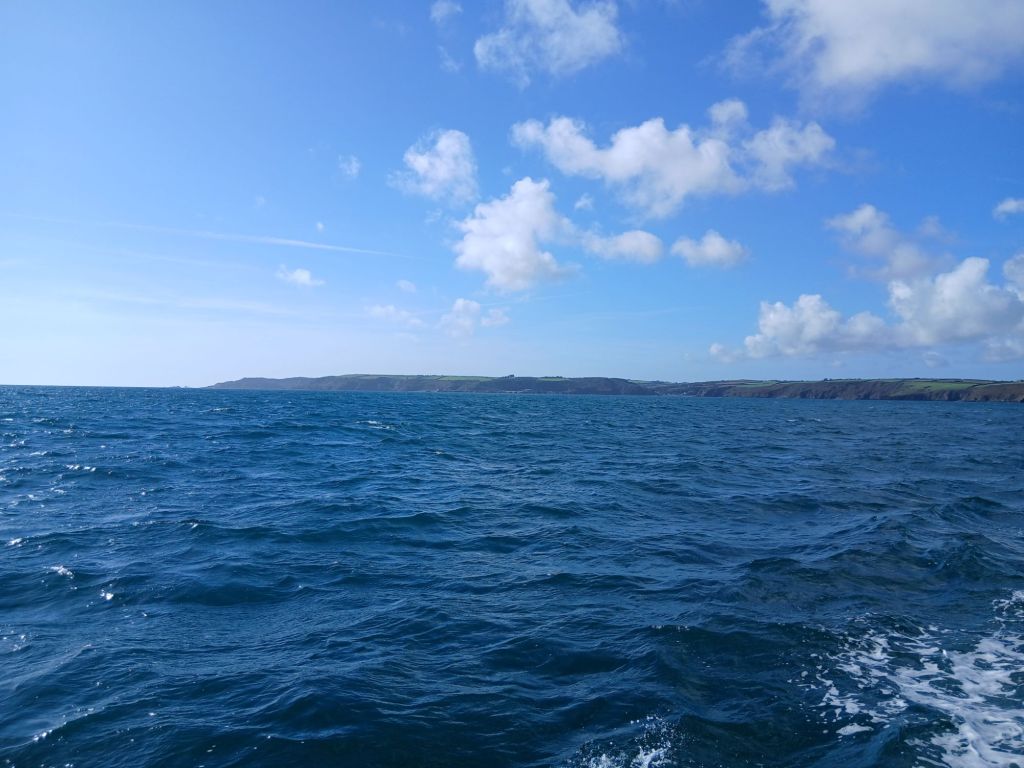
This is our new adventure having owned and sailed a Hurley 22 over 5000nm during the last eleven seasons, my wife Vicki and I (Bruce) decided to look for a bigger yacht back in August 2016 having spent a nice evening on a Sadler 34.
Then we began the search for our new yacht soon after, we put our H22 on the market in September. We looked at Hurley 27s first before moving on to Hurley 30s but it soon became clear we were not going to find a good one. we liked the size of the H30 but we needed to be able to over winter any yacht we bought up a creek. So in the end we searched the internet looking for bilge keel Westerly Konsort,s and Sadler 29s. We looked at lots but it was when we got to Poole to see a S29 we knew we had found her, I made a silly low offer subject to survey thinking it might take all the winter to come to an agreement on price but to our suprise the offer was excepted three days later.
After three months of free storage ashore was offered by the broker we decided to leave Elektra in Poole and do the delivery passage in March have got all the winter jobs plus new standing rigging done before she goes in the water.
It was a five hour drive one way to Cobbs Quay in Poole from our home in Cornwall, we looked at Elektra in October and made an offer subject to survey, we visited her again in November for a week after the paperwork and payment had been made to arrange jobs. Again between Christmas and New Year for three days and again in February for final jobs and launch. For our last visit we hired a car one way picking up Bryan our friend and delivery skipper from Plymouth on the way in March 2017. In some ways it would have been far easier to have done the delivery passage at the end of 2016 but while she was in Cobbs Quay, Poole we had new standing rigging, new cabin heater and got Elektra ready for the passage home.
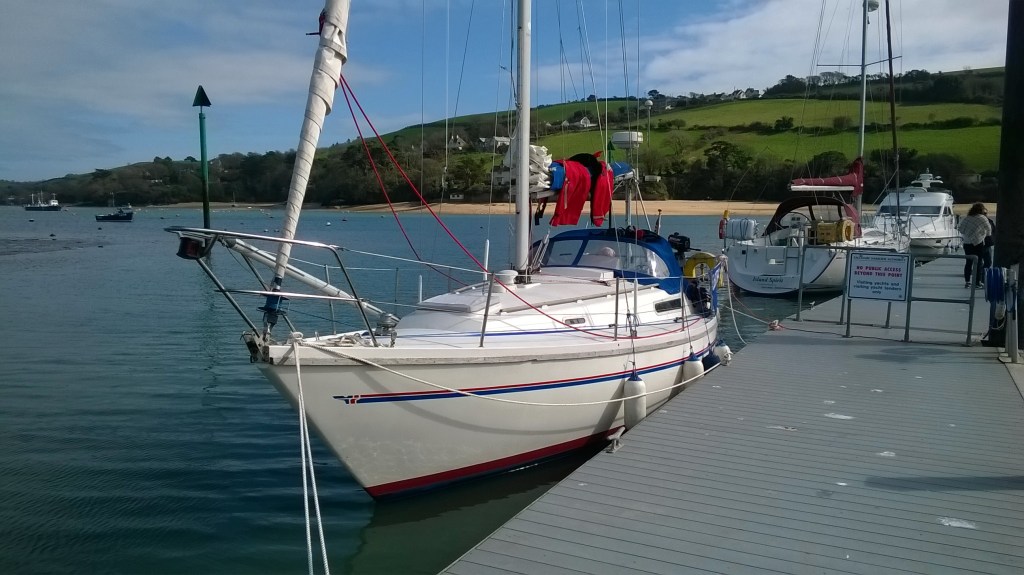
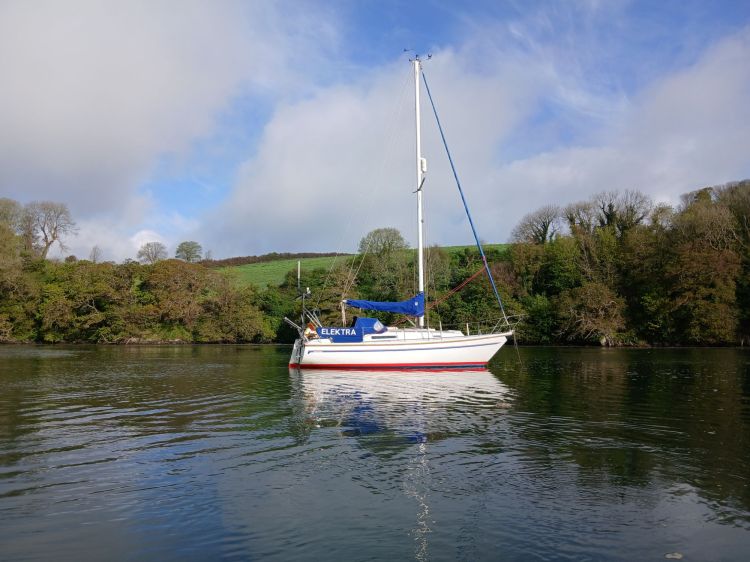
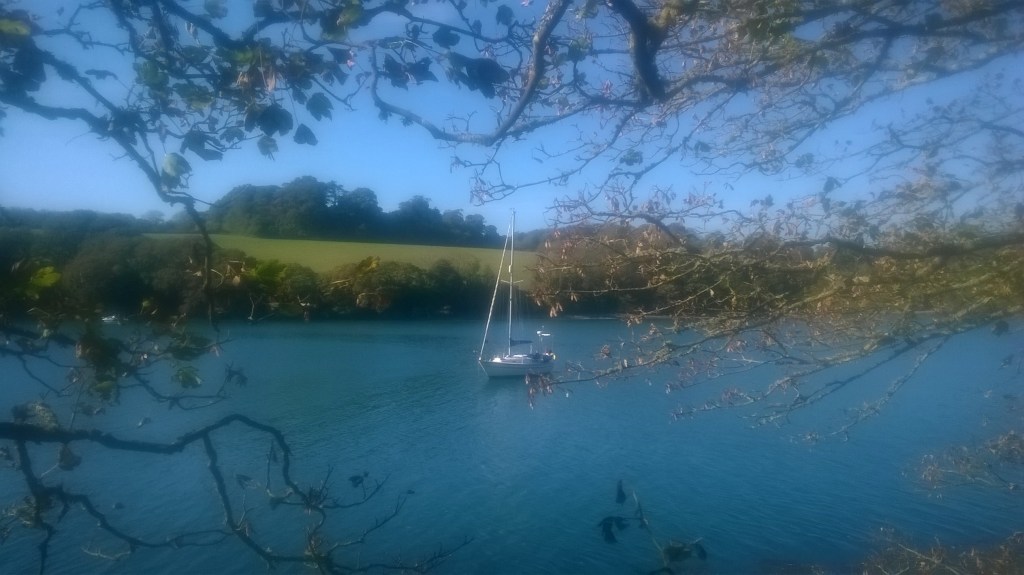
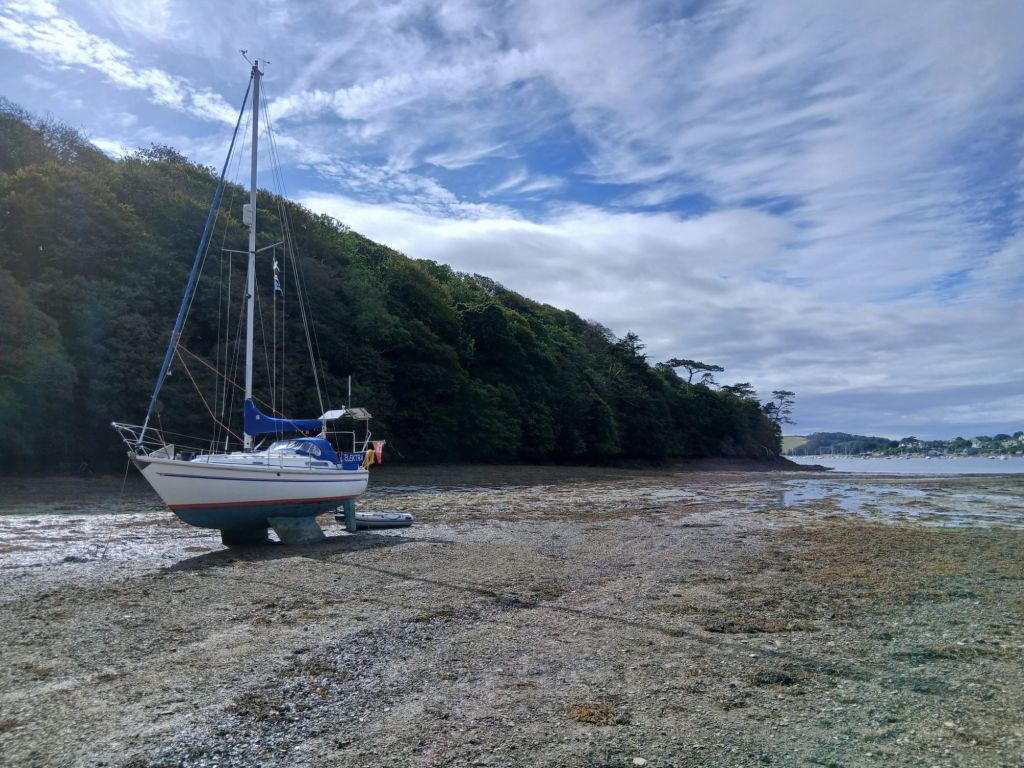
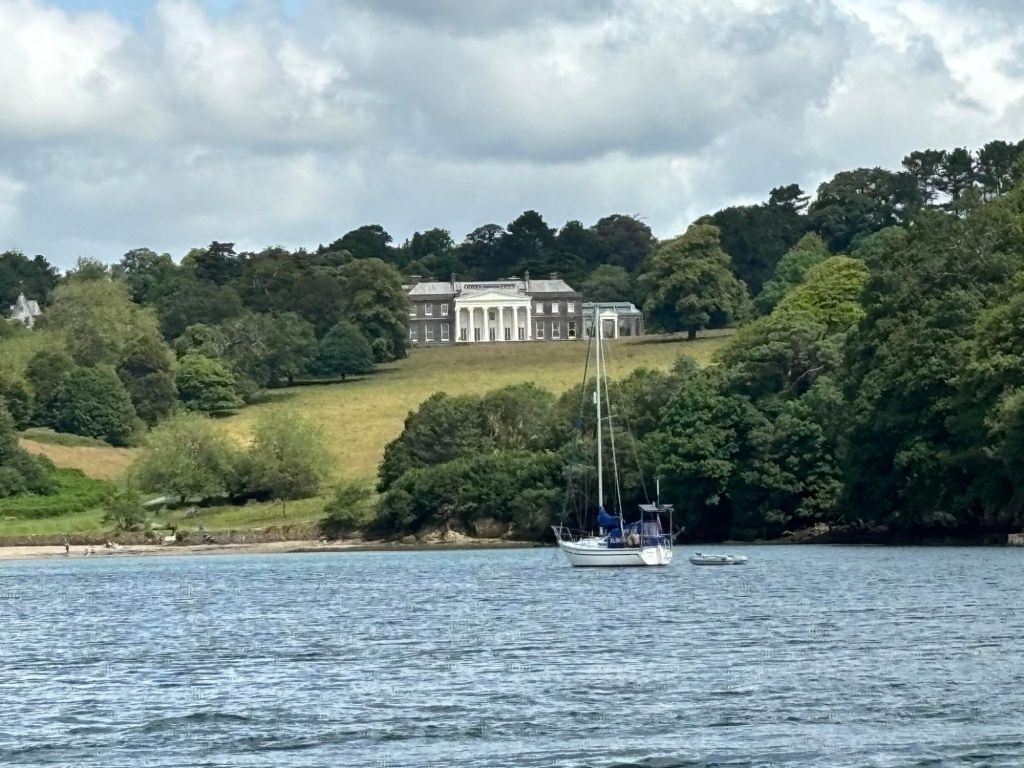
On the way to the sea Cobbs Quay, Poole awating delevery passageThis is the Twin Sails Bridge closing behind us after leaving Cobbs QuayLeaving Poole 12th March 2017On the town pontoon in Salcombe after a 16hr passage from PooleElektra in Salcombe after a 16hr (95nm) passage from PooleElektra awaiting the season in Carne Creek after a 14.5hr (71nm) passage from Salcombe
The winter of 2025-26 had been wet wet wet, it had almost rained every day from the beginning of November to the end of February. And l had only been aboard Elektra about 3 times over that period to check on her. So no extra winter jobs were carried out.
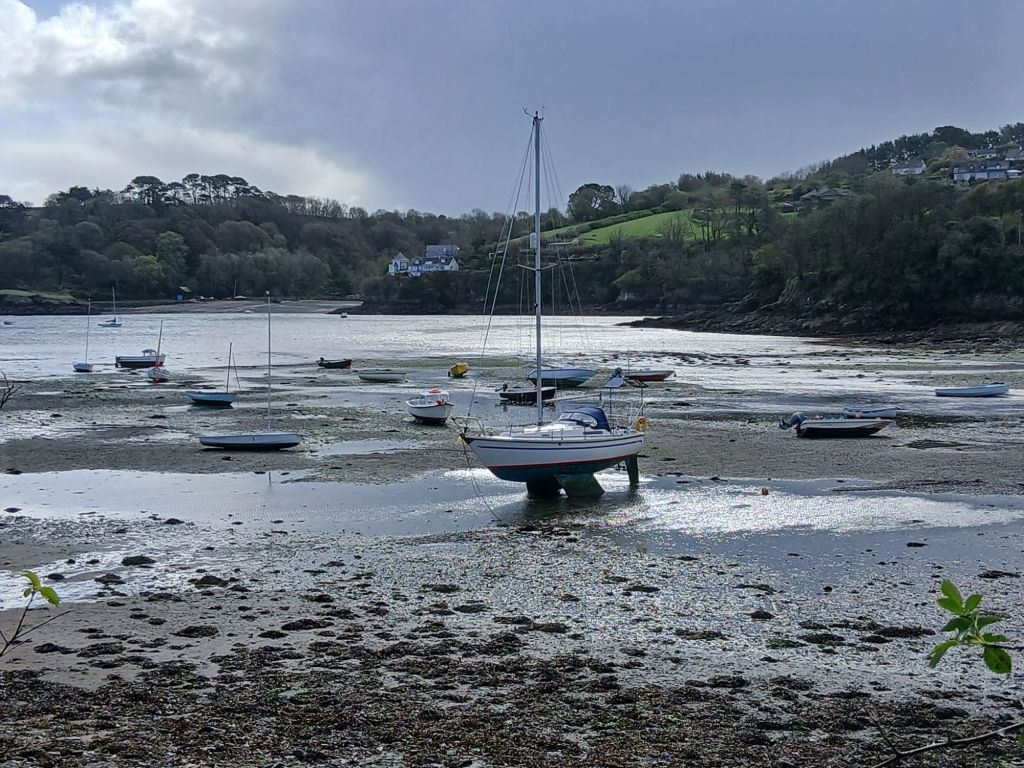
Winter berth in Carne Creek
When a spell of good weather came along in March, l made good use of it and got on with her recommissioning work. Now fully retired there wasn’t any hurry to get Elektra ready for the new season and it wasn’t until the 3rd week of April that l moved her from her winter berth down river to reload her cruising gear. The next day l took her out for a day sail myself. We had decided we would go cruising this season and so hadn’t arranged a swing mooring for Elektra who was just anchored in Carne Creek above the narrows. Then a few days after my day sail, Vicki and l went off for a few days to find out what we had forgotten. We moved on 3 of the 5 days we were aboard and logged 22nm.
Sailing again
The following day after getting home Vicki was rushed to hospital with serve pain in the stomach area. She had a major operation that evening and wasn’t expected to recover. But Vicki was a fighter and 3 days later was moved out of CCU to a general ward. I was visiting her every day. Vicki had been allowed home but was back in hospital with again with complications 3 days later, in the end the doctors weren’t able to save her and she was put with palliative care and came home for her last 12 days. Vicki passed away on the 7th of June.
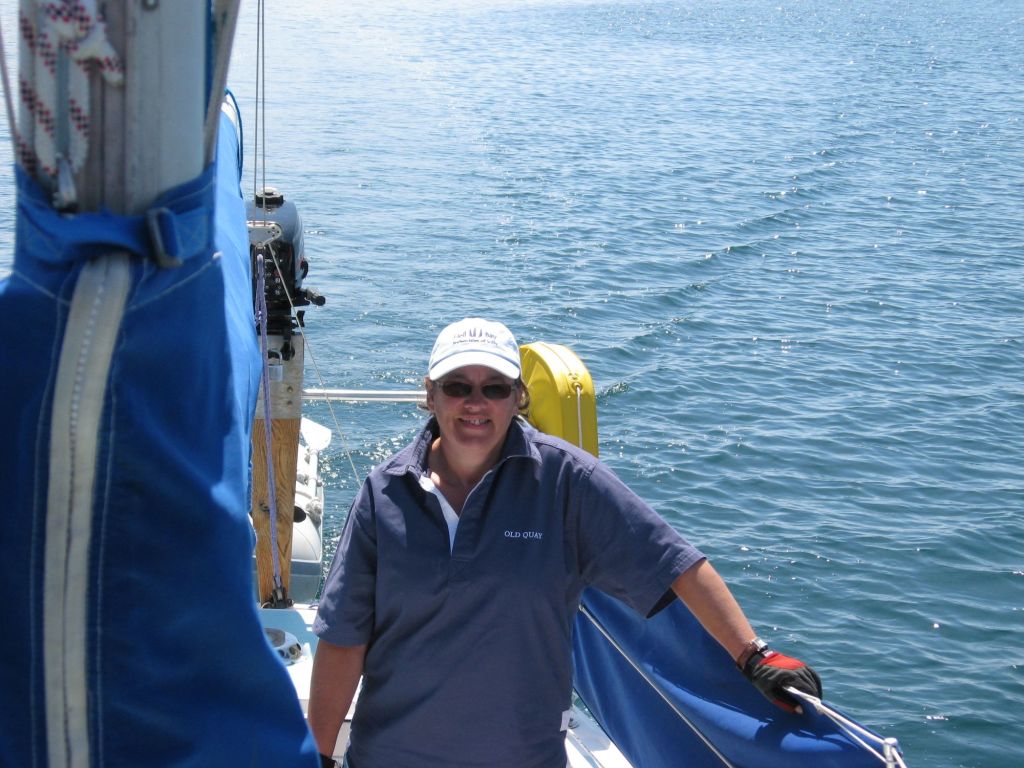
My wife Vicki taken in 2010
During Vicki’s illness l had arranged a seasonal swing mooring for Elektra, at the time thinking l would be looking after Vicki for the rest of the summer. The day after Vicki passed l was keeping myself busy running around here and there. The outboard needed the carburetor cleaned, so l went to St Anthony to pick it up, the tide was in, so l thought l should check on Elektra since l was there. Once out aboard Elektra, l got busy checking and bailed some rainwater out. Looking out at Falmouth Bay, l thought l could go for a sail (this hadn’t been my plan). I didnt know if I wanted to continue sailing without Vicki, but l went anyway, it was only then l knew l did want to continue to sail.
Trying cruising alone
I had a couple of long weekends aboard during June before Vicki’s funeral and then 2 days later l went away cruising on my own as far east as the river Exe. I soon discovered cruising alone wasn’t difficult, it was the mooring up on arrival which was the difficult part. For that reason l mainly anchored or picked up a swing mooring through the rest of the summer.
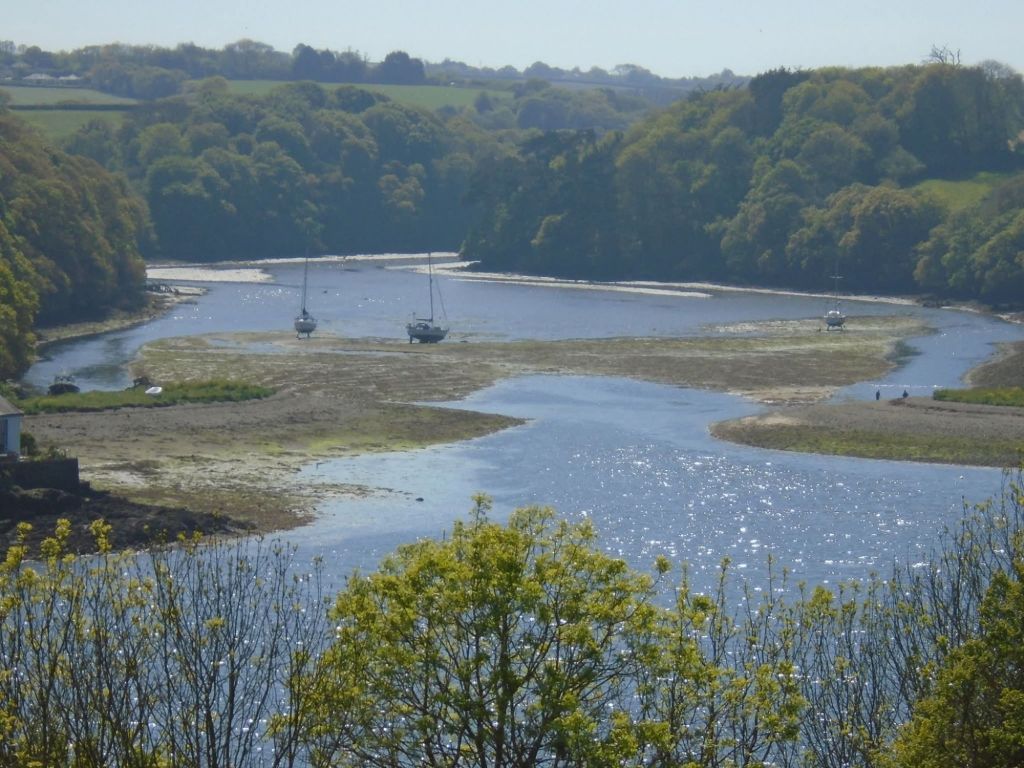
The River Avon, my second visit here in 10 years
The summer turned into the best summer since 2018, some say since 1976. And l was aboard almost all the time though July, August and September. I continued to sail Elektra east from Gillan and back, but this season l never managed to get out to Scilly because the weather wasn’t right at the time when l could go. But l had revisited the River Avon and explored new places including the Rivers Exe, Tamar and Lynher, l had found and used new to me anchorages along the south coast.
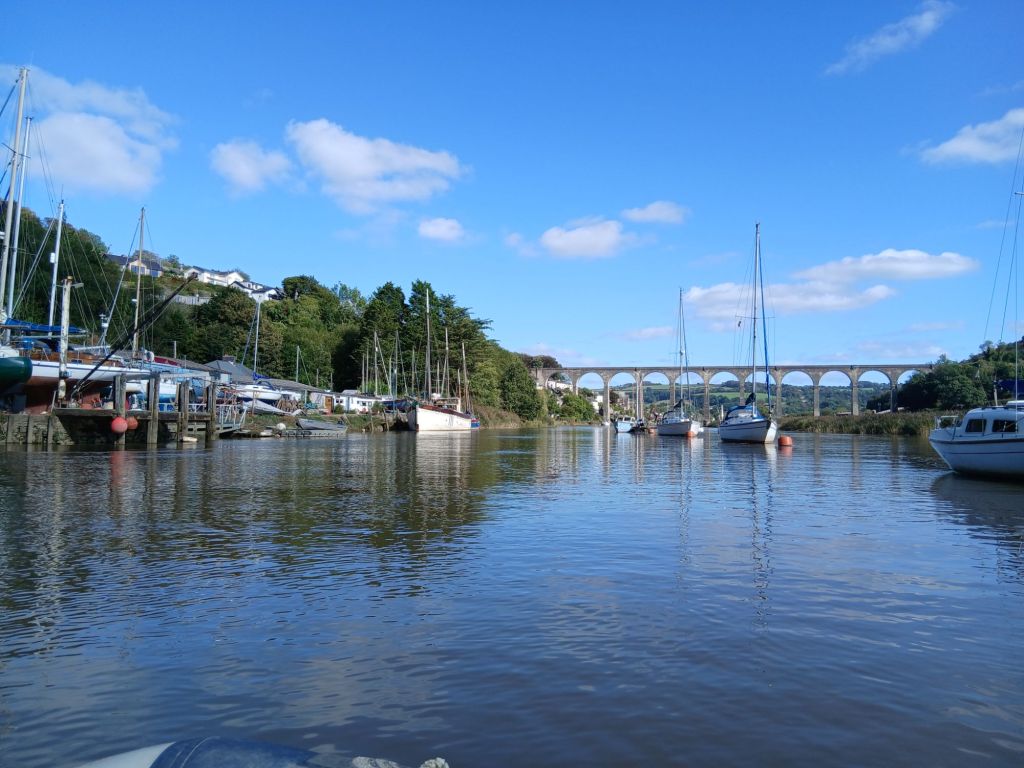
Calstock on the river Tamar
The numbers are, l was aboard 108 days (with Vicki 5) and 88 nights (with Vicki 4) of the nights aboard 70 were at anchor. In 64 days of sailing, I had logged 954nm (Vicki 22). I hadn’t managed to get out to The Isles of Scilly, but still logged almost 150nm more than our last best season, all the sailing had been between Exmouth and Helford River. In the main I had cruised alone all season, it had been a bit of a leaning curve especially mooring up! But I feel I am more confident now for another year, I’m now wondering if I have the confidence to venture away from my local sailing area next season?
Elektra in shelter from the storms, awaiting calmer weather to pull her out.
October is always an iffy month for sailing and this year is much the same. The first few days where just as good as summer, but no wind for sailing. I had also managed a day sail. Since then it had either been raining or very strong winds. Ever hopeful, l continue looking for the weather to go sailing, and this weekend looks good before the wind and rain returns for the last 2 weeks of the month.
Friday 16th, l had to wait home for a plumber to come and do a small job before l could leave for Elektra. I just got to St Anthony before the tide was gone out. I had to row the dinghy into deeper water before l could start the outboard to motor out to Elektra. Just a few bags to lift into the cockpit before lifting the outboard onto the pushpit and dinghy onto davits. The forecast was north-northwest force 4-5 which of course would feel more like force 5-6 because of heading into it. I was in 2 minds whether to leave or not, but looking out over Falmouth Bay l couldn’t see many white horses.
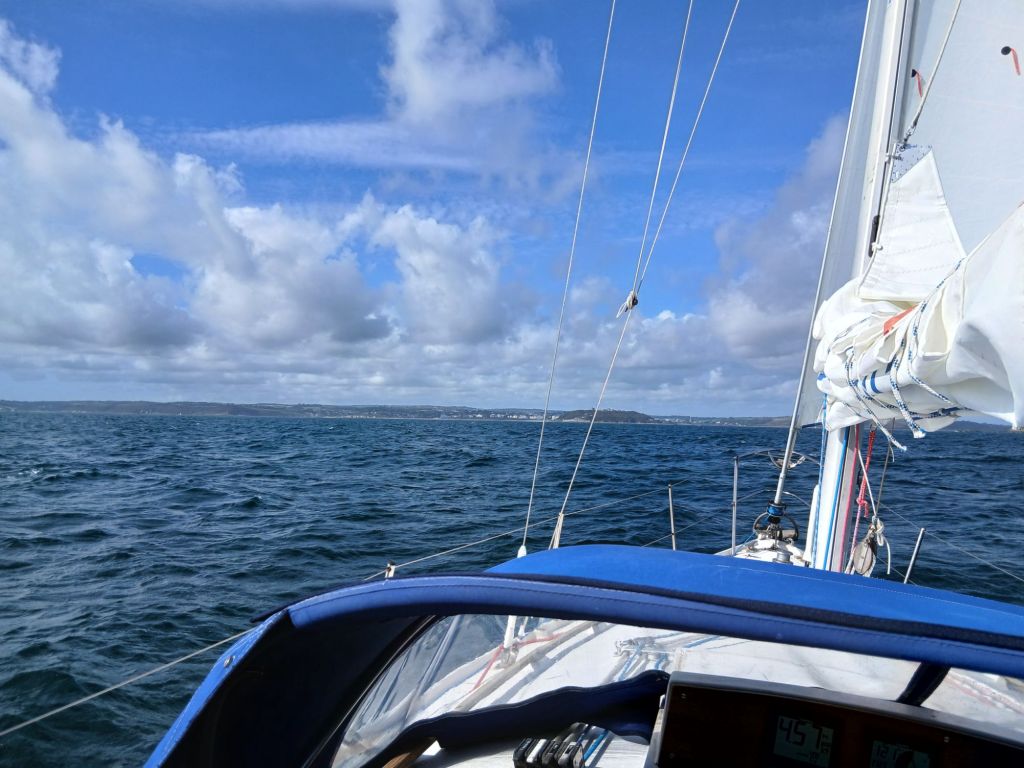
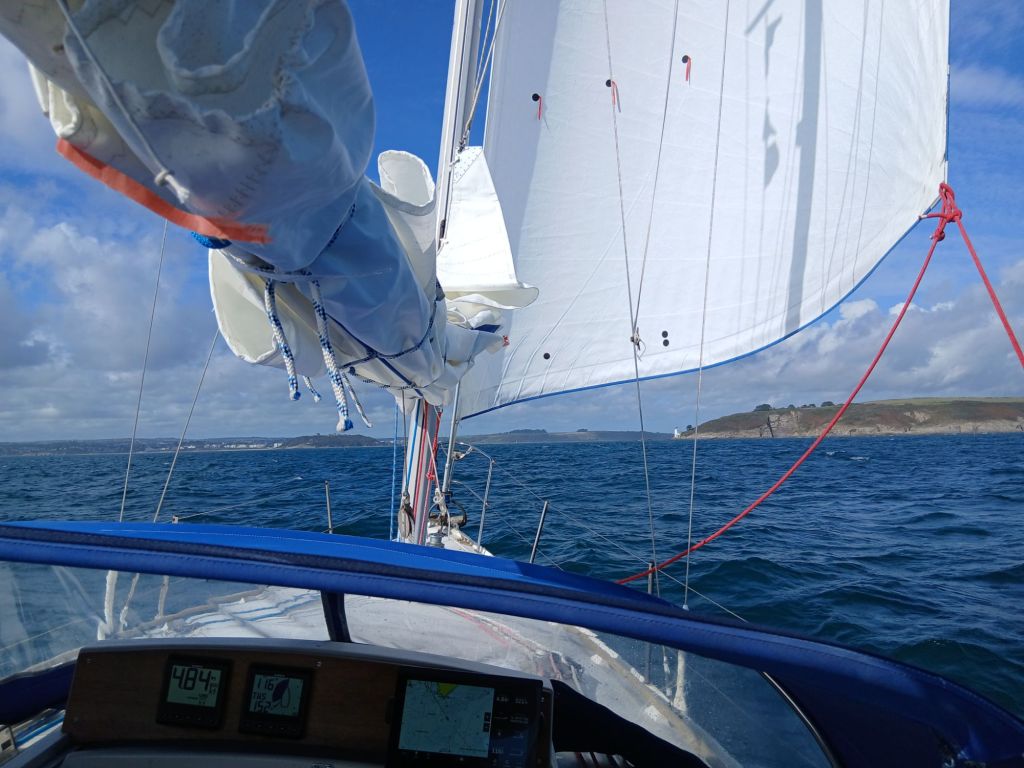
So in the end l decided it should be okay, having got Elektra ready, l dropped her mooring at 1400hrs and motored slowly out between Carcroc and Dennis Head and set just the genoa with 2 reefs, stopping engine once clear of Carcroc. Elektra was logging 4.5kts from the start, using the tiller pilot l let out another couple of rolls and she picked up to 5.5kts. From then on l had the helm of Elektra and she was hard on the wind and following the track most of the way across Falmouth Bay. It was only approaching the Carrick Roads with the out going tide which pushed her off course.
It was obvious that Elektra wasn’t going to make it into St Mawes on this tack, but having had a good sail l didn’t bother tacking and started Elektra’s engine, motoring north around the point into St Mawes Harbour. Elektra had logged 4.75nm in an hour with almost 2 reefs in the genoa and no mainsail.
I motored Elektra on up the Precuil River and dropped anchor at 1530hrs having logged 6.5nm. Colder now, l ran the cabin heater in the evening to say warm.
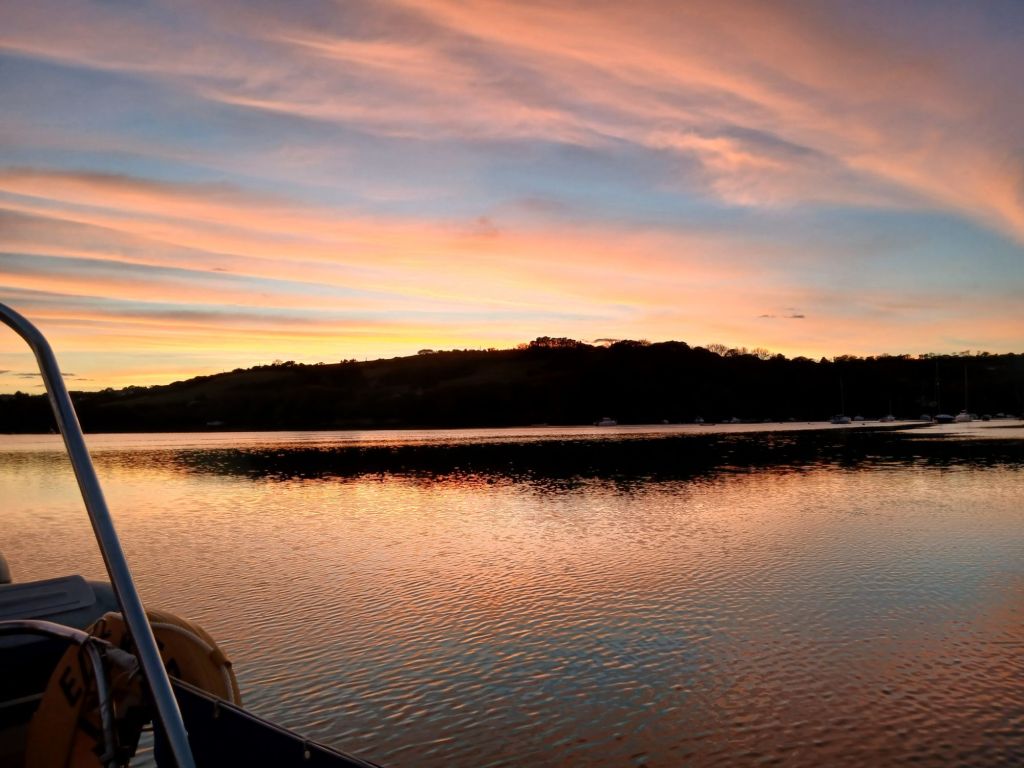
On Saturday morning there was a frost and when l got out of the bunk, l saw the temperature was 9C, so l started the heater again and quickly put some clothes on! The cabin seemed to take ages to warm up, so l ran it for 1.5hrs before turning off. A little while after that the sun came up and warmed things up. So l decided to go for a walk. A dinghy ride ashore a nice 1.25hr (7500 steps) walk and a dinghy trip back. The rest of the day l checked things out and jotted down a list of jobs which need doing over the winter (that should keep me busy l thought 🤔). At the end of the day we were treated to a wonderful sunset.
Sunset in the Precuil River
That evening l ran the cabin heater 3 times as the temperature dropped outside. I watched the battery monitor with Interest, but although it pulled heavy load to start each time the batteries coped well.
I set my alarm for 0700hrs as l needed to get back to Carne Creek by 1030hrs, l got out, dressed, started the heater again and had breakfast. I pulled Elektra’s anchor up at 0840hrs and motored her back down the Precuil River for the last time this season, it wad a lovely morning but definitely a chilly wintery air. The forecast said northeast force 4, but there didn’t seem much wind at all motoring out past St Mawes.
But l set her genoa and she was logging 3.5kts SOG into the incoming tide stream. As we got a bit further away from the land the wind increased and the swell with it, was a 3-4ft short swell, making for a corkscrew ride. Could have done with a bit more wind to help Elektra along, after about a mile l started her engine again and was motor-sailing across Falmouth Bay to arrive in Gillan Harbour in time to have enough depth to get into Carne Creek.
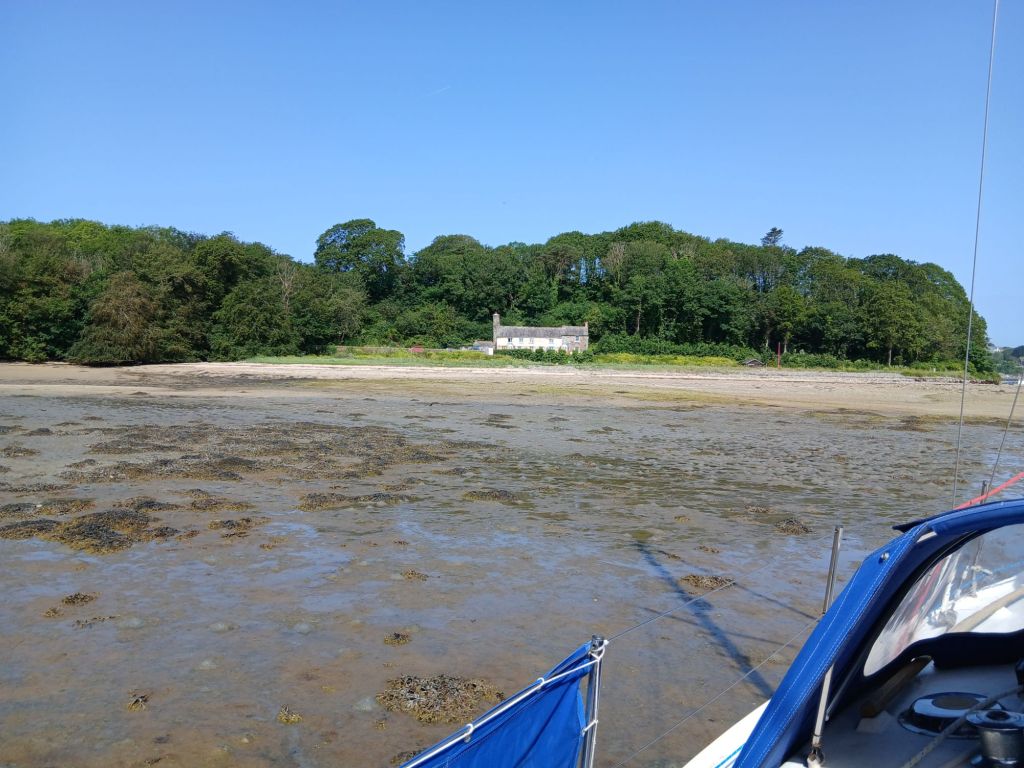
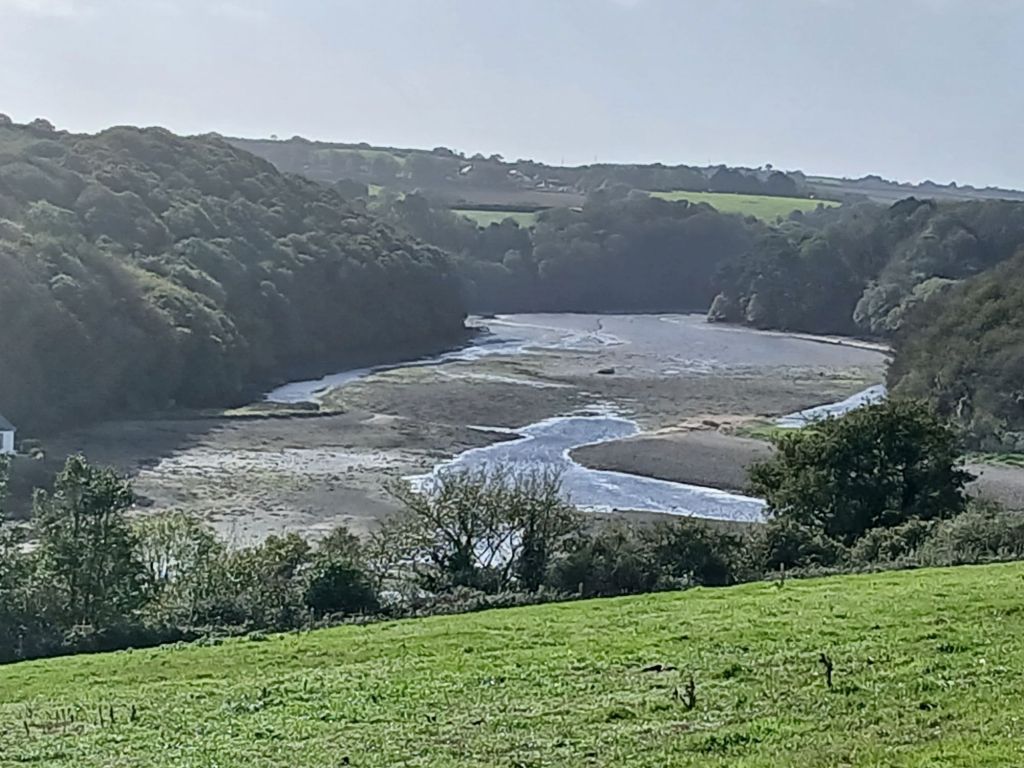
The narrows between Gillan Harbour and Carne Creek
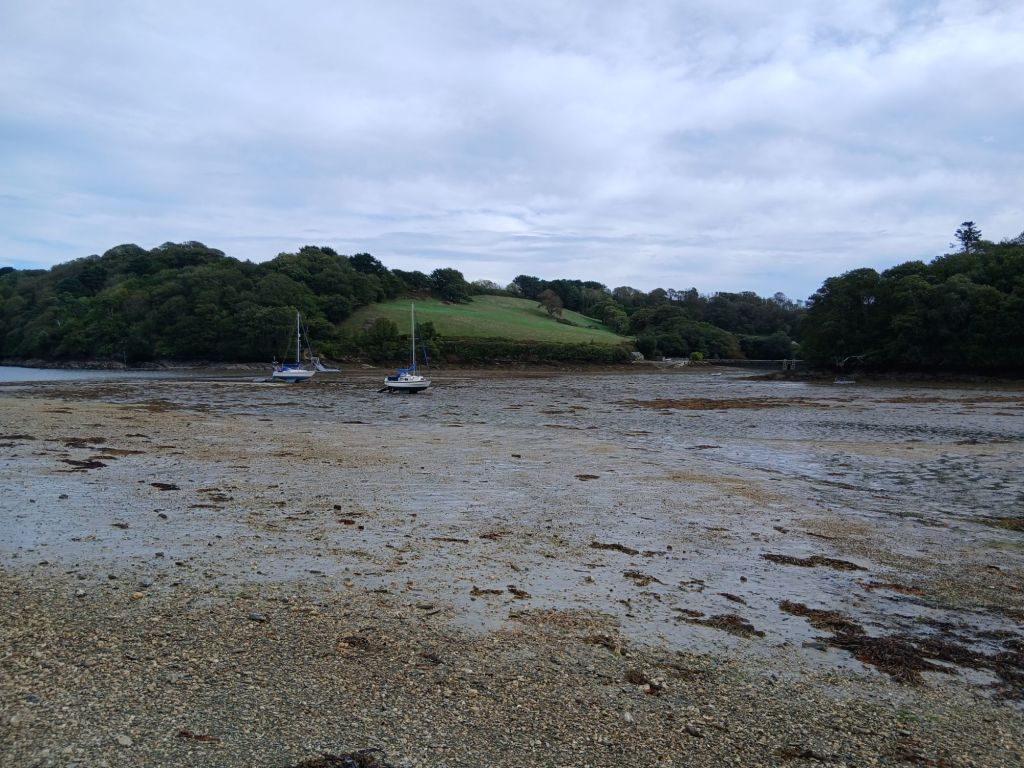
We arrived into Gillan Harbour right on high water. The tide was meant to be 4.2m but the high pressure of 1028 had obviously pushed the high water down. I very slowly motored Elektra in though the narrows and followed the channel to port around the raised ground in the centre. Then over the slightly deeper area of mud beyond. Dropping anchor with just 0.3m under her keels at 1030hrs having logged 7nm.
The same narrows at low water
After l had packed away Elektra’s cruising gear. I set about removing her sails for the winter, this is a fairly long job especially as l was alone. But l got it done eventually on a lovely dry day and rolled up into their sail bags. I then removed her dodgers. By the time l had finished the tide had gone out, so l would be staying aboard another night. After the lovely day the evening became cooler again and by 1600hrs l had closed the companion way hatch and turned on the cabin heater back on. I ran it a couple more times in the evening before going to bed early with a hot water bottle.
The next day during breakfast l ran the cabin heater again. Then washing up, afterwards stripping the bed and packing up all the clothes and food which were on board. Get off Elektra around midday and loaded up the dinghy with as much as it could carry, l headed ashore to unload the dinghy into the car and drive home.
With needing to be home for a number of things during the week and fitting sailing also around the strong winds forecast, l only managed to get out for a day sail on Saturday.
I needed to get down to St Anthony by 0900hrs before the tide went out. A few other boat owners had the same idea and we all made our escape from St Anthony soon after each other. Once out aboard Elektra, there wasn’t any hurry to leave. The forecast was northwest force 4 to 5, decreasing to force 4 later. I had a bit of washing up which l had forgotten to do before I left Elektra last Tuesday, once done l got Elektra ready to leave..
Gillan was calm, no hint of wind when l dropped her mooring at 1005hrs, but with the forecast l decided only to set Elektra’s genoa. What followed was an exciting sail across Falmouth Bay only slowing as Elektra got into the shelter of Pendennis Point. Then going north up the Carrick Roads Elektra was sailing against the out going spring tide but still logging 4.5kts SOG. I have a rule to say in the channel north of St Just in Roseland 2hrs either side of low water spring tides and there’s also a shallow area south of St Just and being inside the time l needed to keep clear of it. I was considering tacking west as Elektra approached from the south. But then the wind altered a little and l could point Elektra better and if the angle held she would sail past the edge of the shallows. Which is what happened with as little as 1.4m under her keels. Another yacht had come out of Falmouth with 2 reefs in both her mainsail and genoa, she was much bigger but almost sailing at the same speed.
I continued to sail Elektra into the entrance of the deep channel west of St Just, there l started her engine and rolled away her genoa to motor northwest up the channel. The other thing decided to short tack up the channel. I had to stop and wait for her to cross back after her first tack, but had motored Elektra far enough northwest northwest not to be affected by later tacks.
Anchored in Channels Creek
I motored into Channels Creek and dropped anchor at 1205hrs having logged 8.5nm. I stayed there until 1430hrs when l pulled the anchor. There was so much tide coming in against that l just had to motor Elektra south until l got her out of the shelter. Once back into the wind, l set her genoa again for the passage south.
It probably would have been better to have more sail for down the Carrick Roads, as it took 1.25hrs to get back south to Pendennis Point. But once clear of the points shelter l was glad that l hadn’t pulled up the mainsail as Elektra was healed over hard and logging 5-6kts. I picked up her mooring in Gillan at having logged 16.5nm for the day.
On Monday with another day and zero wind I had another long walk inland and along the coast to Porthcatho and back via the road to Precuil River.
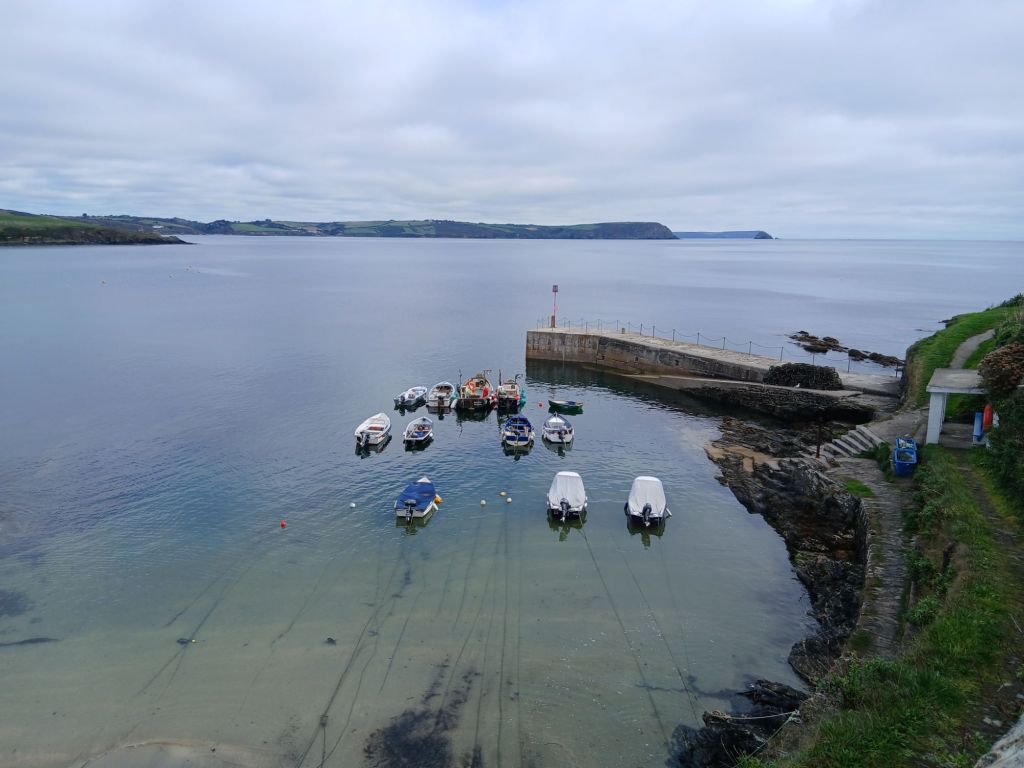
Porthcatho Harbour, Dodman Point in the distance
On Tuesday, I had arranged with my marine electrician for a few little jobs to be done. I was out early for breakfast and pulled Elektra’s anchor up by 0830hrs. Another day without any wind, I motored her back down the Precuil River and out past St Mawes and across Carrick Roads into Falmouth Harbour at 0915hrs, about 3nm in total. I was looking for mooring no N105, thinking I had found it I pulled up the pick up buoy only to discover it was M105. Without stoping Elektra’s engine I got into the dinghy and rowed around trying to find the right mooring without any luck. So I decided to stay put, and stopped her engine and switched off her insurments. I contacted Rupert the electrician to say arrived and ask where he wanted picked up from.
Rupert contacted me at 1030hrs and asked for me to pick him up from the RCYC in 15mins. Which is what I did, within an hour the small jobs where completed and I had dropped him back on his RIB by his club.
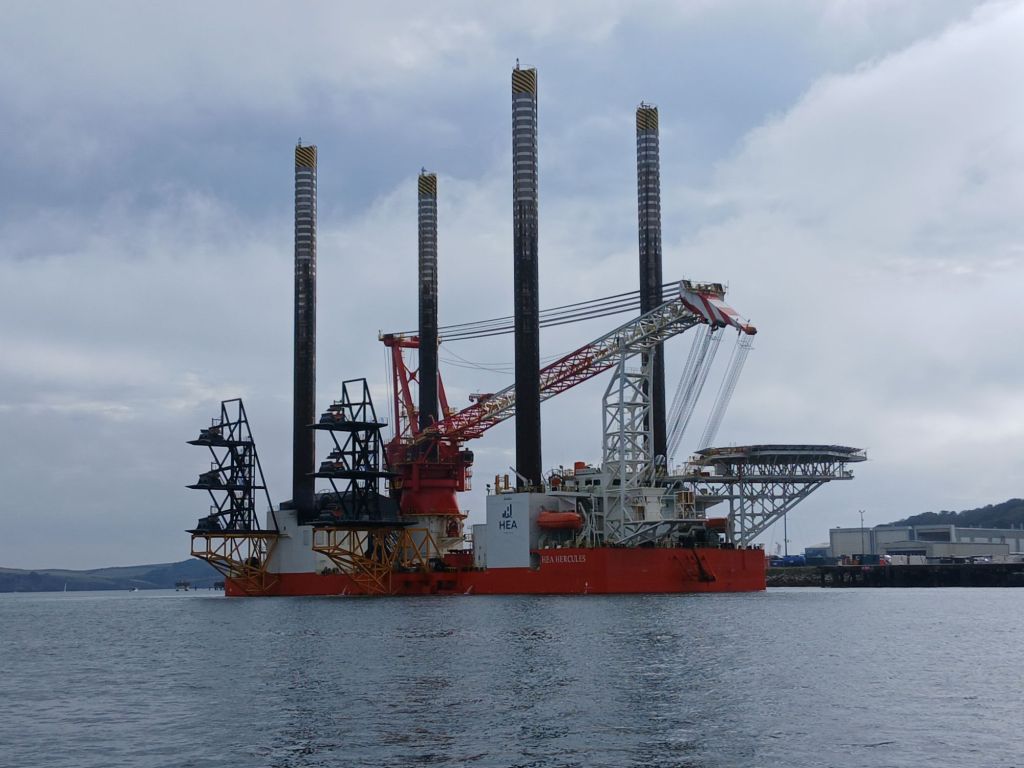
On my return I lifted the outboard off dinghy onto the pushpit and lifted the dinghy onto it’s davits. Then I got Elektra ready to leave, dropping the mooring at 1220hrs, I motored her slowly out of the moorings around a huge floating crane, which had just arrived in Falmouth Harbour. Once past I turned Elektra south-southeast around the Falmouth harbour breakwater towards Pendennis Point with southerly force 2, I just continued to motor Elektra around Pendennis Point and south-southwest towards Gillan Harbour. At 1330hrs I picked up her mooring in Gillan having logged 11nm for the day.
This was super weather for October and the winter will soon be here so l had to make the most of it. Another walk, this time motor dinghy down river to Place ferry pontoon and walk from there around the back of Place church, along the lane and up the field though the gate to the field which over looks St Mawes harbour.
St Mawes
I walked along the top of that field and around the corner towards St Anthony light house.
Looking across the entrance to Carrick Roads at Pendennis Point, with Falmouth on right.
I continued to walk towards St Anthony light house along the top of the field and after crossing the dam built for the light house water supply, l took the steep short cut to the National Trust car park fort and view over looking St Anthony light house and Zone Point. Walking from there around the point and on northeast along the coast path.
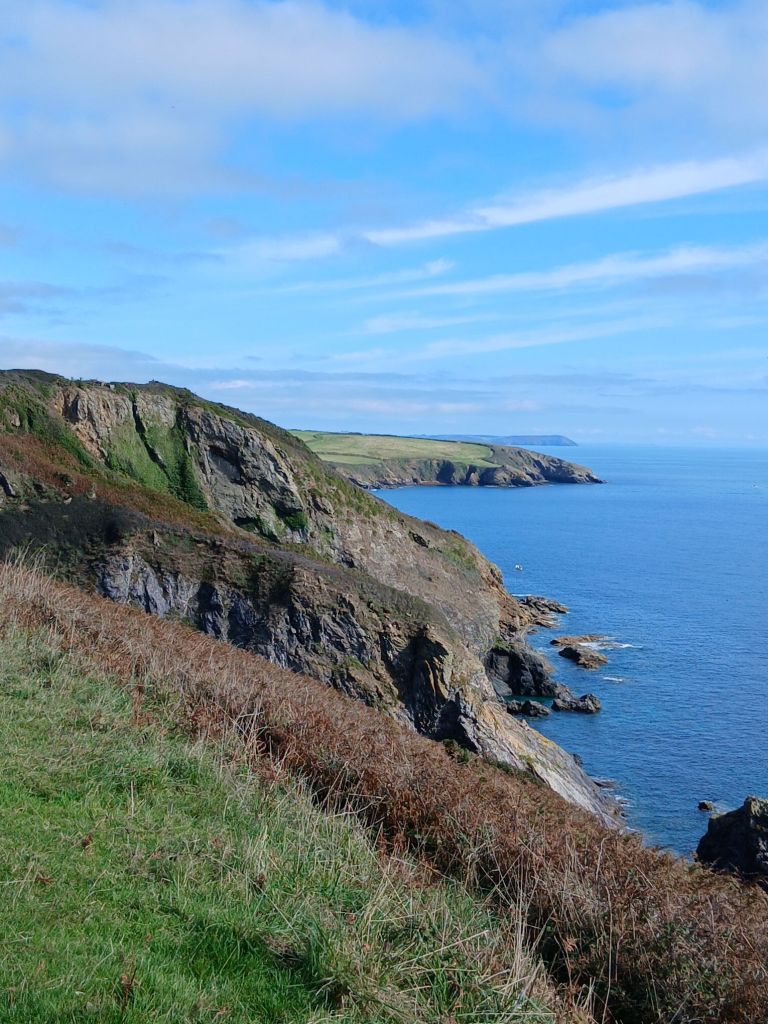
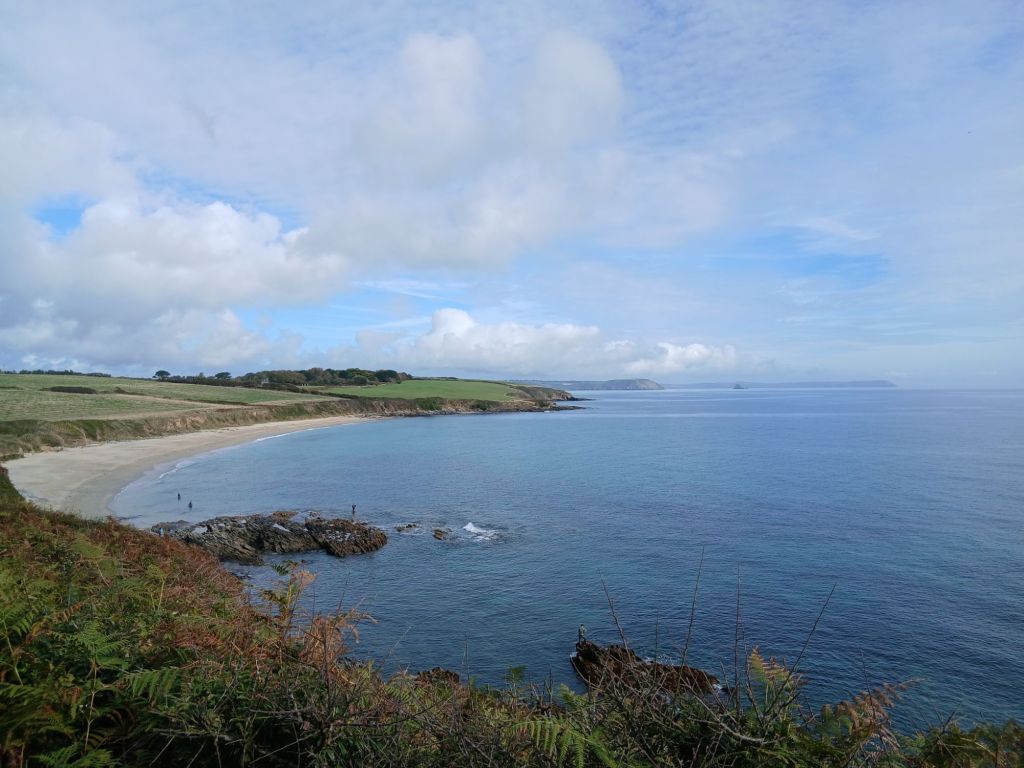
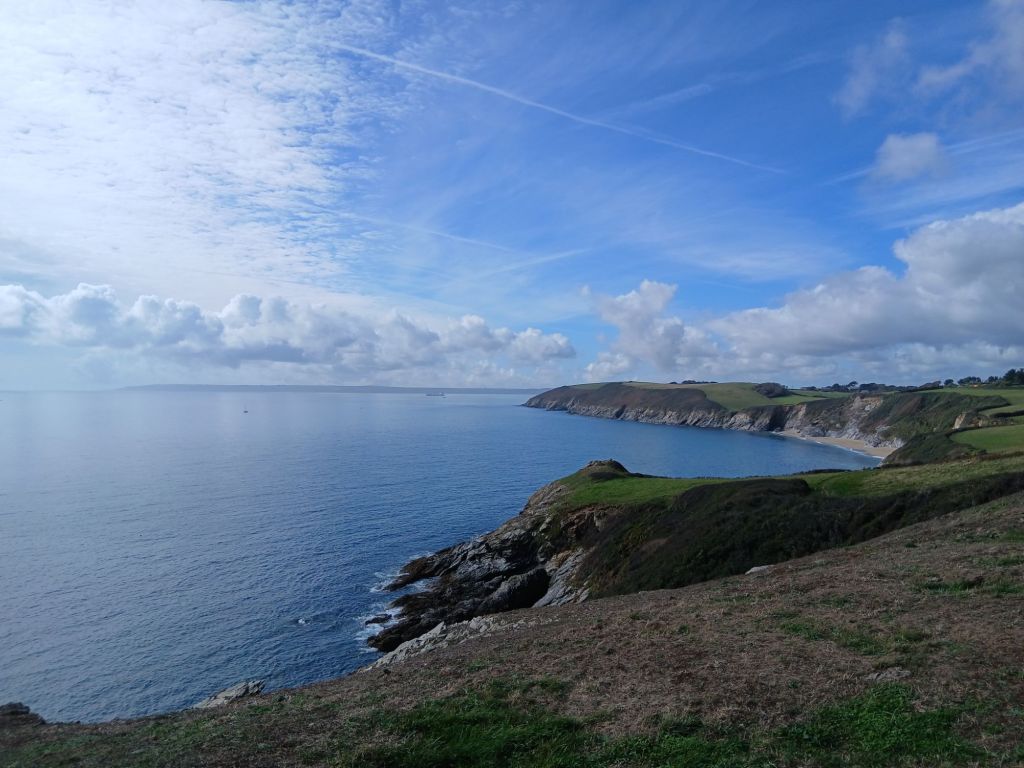
Above Zone Point looking over Falmouth Bay
Continued to walk along the coast path in this really hot weather.
Great views
Walking on l eventually got back to the path which l used yesterday to get back to the road. From the NT map in the carpark l had discovered another path back to Place Quay which l wanted to use. I wasn’t disappointed as from this path it had a great view of Place anchorage from a higher point.
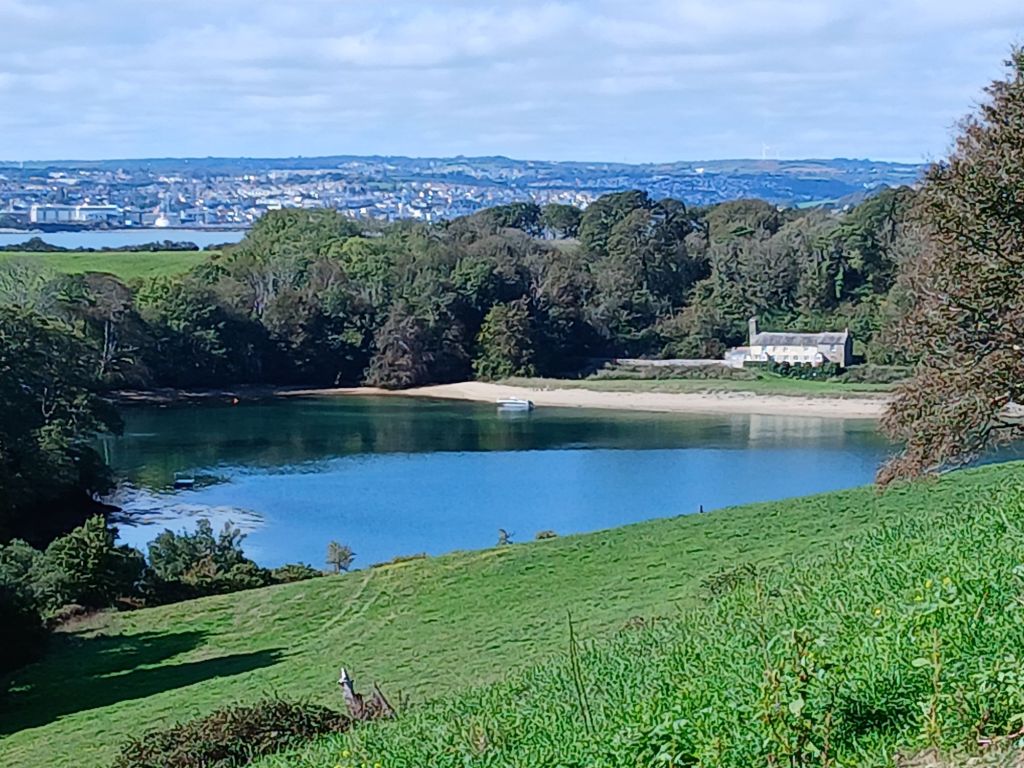
Place anchorage, with Falmouth visible above the tree line.
Having walked the rest of the way and then motored the dinghy back to Elektra, a new app on my phone was telling my l had done 8,500 steps, apparently 6,000 is the recommended daily amount. Which kind of made me laugh, As l reckon l must have been walking 50,000 a day back around the year 2000 with my job, no wonder l would lost 3 stone per year!
The wind from the day before blew it’s self out by aboard 2200hrs and a calm night followed. I slept like a log, not waking up until 0800hrs. Getting out and making and eating breakfast, it wasn’t until 0930hrs before l opened up and went into the cockpit.
I fitted the outboard on the dinghy and motored over to a Moody yacht which l had seen a few times in resent weeks. I met the owners Peter and Liz and had quite a long chat before they went off for a walk. It seemed Peter and l were both born in St Austell.
Walking on the coast path
After that l went to the co-op in St Mawes for, l needed milk but bought other shopping because l was there. Once back from shopping, l decided to go for a walk myself and headed over to the corner of the creek where there was a knotted rope to enable me to climb up the bank onto the national trust footpath. Taking the inland path towards the south coast of the Roseland and on through the NT entrance to the coast path. There in the cafe was Peter and Liz again, after a brief chat l went on again and southwest along the coast path. I took the path back onto the road and walked back down hill though Place and into the wooded path beside the Precuil River.
From the path along the Precuil River
From the path l could see Peter and Liz dinghy still on the beach and thought any minute now we will walk into each other again. I wasn’t wrong! Before they got back to their dinghy we had another chat. I walked the last bit of the path back to my dinghy and having pushed it back into the water while l was getting ready to start the outboard they motored by in their dinghy and l gave a little wave, lol.
As D was back aboard her yacht l thought l would go and see if she wanted a drink later. She agreed to come over about 1430hrs. That’s what happened and we had tea and a chat. We are a little the same, l need someone who is very chatty which always pulls out memories, but we are both not very chatty, so we kind of of ran out of conversation.
After D left, l read the CA magazine until it was time to put dinner on. And then did some more blogging.
Having gone home for most of the week because strong winds, l wanted to get out sailing again. Thursday evening l had something to go to which in the end got cancelled, so l got ready to leave home for Friday morning.
I was down to St Anthony for high water and l launched the dinghy loaded the bags from the car into the dinghy and motored out to Elektra on her mooring. Transferred the bags to her cockpit, lifted the outboard onto her pushpit and hooked the davit lines to the dinghy before climbing aboard. But stowing away everything and getting Elektra ready to leave it was after 1100hrs before she was ready.
Sailing east
The forecast was south- southwest force 4 gusting 5, although l had unwrapped the mainsail l didn’t think it would be needed and didn’t pull it up. I dropped the mooring at 1120hrs and headed east out of Helford River entrance on just her genoa. She was still logging over 5kts on a reach, it was great sailing but l couldn’t see many other yachts out sailing. Still going east after an hour Elektra had logged 5.25nm, l carried on east for another half hour and then tacked her around because it was easier to get the sail though.
Looking south towards Manacle Point Heading northwest for Falmouth
And then heading northwest back towards Falmouth on a broad reach, l think she would have been a lot quicker if the sea hadn’t been so lumpy. It was interesting looking at Falmouth from here, it was a view l hadn’t seen before. About a mile southeast of the Carrick Roads after a 2hrs sailing Elektra has logged 10.5nm.
Approaching St Anthony light house from the southeast
As we approached the entrance to the Carrick Roads Elektra then slowed because of the out going tide but still logging 4kts SOG, l sailed her on into St Mawes up to the moorings before starting her engine. Motored her up the river and dropped anchor at 1415hrs having logged 13.5nm
Elektra was aground 2hrs either side of low water now as the tides moved towards springs, when she floated again about 1400hrs on Saturday. I pulled up her anchor and motored her southwest back down though the moorings to Place for better shelter from the forecasted southeast vearing southwest force 5 gusting 7 for Saturday night and Sunday morning. Rain was also forecasted for Sunday morning. In Place Elektra would ground 3hrs either side of low water, which isn’t a bad thing during any blow, as your yacht can’t drag anchor if aground. Not that I had any problems with anchors draging since buying her 10kg Rocna anchor over the winter 2022-23. Elektra grounded about 2130hrs which was shortly before the wind started blowing.
When I awoke 0700hrs after the night of wind Elektra was swinging about, keen to get away but the anchor was holding well. Elektra grounded again at about 1000hrs and was completely dry about 1 hour either side of low water. The forecast was for the wind to vear into the northwest and die down, with little or no wind tomorrow. I decided I would leave Place when Elektra was afloat and go back to Gillan Harbour as the forecast for Tuesday-Thursday was wet and windy. While Elektra was dry, I climbed down her boarding ladder and went for a walk, to have a look at the sea conditions, across the beach, up the path in the field and though the gate. From there I could see part of Falmouth Bay and across the Carrick Roads into Falmouth, there wasn’t any white horses, but looking at a yacht exitinng the Carrick Roads still a southerly swell in Falmouth Bay, but the wind had already moved into the northwest. On my return to the beach, I thought I would say hello to the owner of another yacht anchored there, a Westerly Centaur. Over reasent years I had seen the yacht quite a lot but never seen the owner to say hi. I walked out to the Centaur, the bottom here was a bit like slow-quick sand! Lol. D was scrubbing off her yachts bottom in shorts and bear feet. I in resent days had changed from shorts to trowsers and wellies, if you stood still too long, you simply sunk into the bottom. D and I had a sort chat, but it wasn’t a place to linger long, so I headed back the way I had come, before I lost my wellies!
Company in Place
Back at Elektra on a more solid bottom, I could wash my wellies off in a puddle and then climb back aboard Elektra via the dinghy to avoid getting Elektra’s cockpit covered in mud. It looked as if D had climbed back aboard the Centaur covered in mud, then washed herself before washing out the cockpit. The joys of boating, come in many forms!
Soon the tide was returning, once high enough I pulled the dinghy back up on her davits and started getting Elektra ready to leave. She floated about 1500hrs, now with the wind blowing from almost the opposit direction, she lightly bounced from keel to keel across the bottom until she also was facing the opposit direction. I pulled her anchor up at 1515hrs and motored her slowly out of Place with 0.3m showing under her keels. Out though the moorings into St Mawes out harbour, the wind direction seemed more west-northwest and force 4 gusting 5. I set just about half her genoa, she was going into the in coming tide but still logging 4.5kts. I let out a little more sail only for her to brooch, so I had to pull it back in again! I think it took half the way across Falmouth Bay to get her sail right, but in the end I managed it, logging over 5kts, we turned into Gillan Harbour at 1630hrs having logged 6nm. From there I motored her into Carne Creek and dropped anchor at 1645hrs. I had decided on anchoring her in Carne Creek because having looked at 2 forecasts, one said east wind and the other southeast, but which do I beleave? Our mooring in Gillan Harbour is open to the full force of the English Channel durring east winds.
Anchored in Carne Creek
As it happened the wind was southeast with heavy rain. I left Elektra anchored in Carne Creek until Wednesday morning when I got out early and moved her back onto her swing mooring in Gillan Harbour for the then forecasted strong southwest winds.
The Truro Harbour master used to allow local boats and yachts anchor for nothing in their area north of St Just in Roseland and Truro and Fal Rivers. But 2 years ago they changed to free first night for locals.
Old photo of Elektra anchored in Channels Creek
Last year Vicki and l didn’t visit even the once, l had been anchored a few nights this season and had been charged £7 for one night. But doesn’t, being charged discourage visits, since being charged l had stopped for an occasional night but made sure l didn’t stop two nights. And after one night in Channels Creek it was time to move on.
So, l planned to motor south to St Mawes and the Precuil River. Having planned to motor l didn’t bother unwrapping the mainsail but once south of Turnaware Point at 1020hrs there seemed enough wind to sail. So l set the genoa and was logging about 3.5kts in the southeast force 3. I was liking this sailing, minding my own business, but more the one other yacht decided to take Elektra on in some sort of race, of course they were all faster but had more sail up. I had tacked Elektra 7 times by the final tacked which took her from Pendennis Point into St Mawes Harbour, l sailed Elektra upto the moorings before starting the engine and rolling away her genoa.
I motored Elektra up the Precuil River though the moorings to anchor in the same area as we normally did. But this time l headed as close to the northest creek as possible before dropping anchor at 1250hrs having logged 9.5nm.
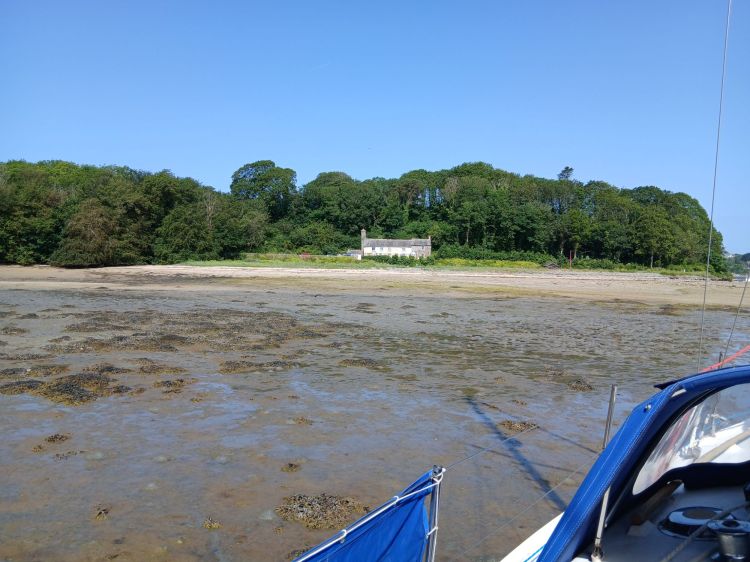
Next day at first light l motored Elektra into the creek and beached her to dry her out over low water. Something which hadn’t ever happened before was her anchor chain had got twisted this season. None of the yachts we had sailed had ever had an anchor swivel, but it hadn’t ever been a problem until this season. I think is was the 3 weeks anchored in Carne Creek when Vicki was in hospital. With the tide coming and going and no swivel the chain had tangled.
Dried out to untwist the anchor chain.
Anyway being able to pull all her 40m of chain out of the locker, l was able to untwist it. It was surprising how twisted it was, so good job done. I’m looking into an anchor swivel for next season. When the tide came back later in the evening I motored Elektra back out into deeper water and re-anchored.
I had decided to have a few more days aboard before the weather forecasters were suggesting bad weather from Tuesday next week.
I had set off from Gillan Harbour at 1315hrs aboard Elektra with her genoa set into a northerly wind, only force 3 as it turned out. So l pulled up her mainsail with one reef, then she was logging 4.5kt, about halfway across Falmouth Bay a DFC message from Falmouth CG announced the presence of an unexploded 2nd WW bomb off the Falmouth water works, the bomb was going to be moved out into Falmouth Bay (with a DFC message comes an alarm which needs to be turned off at the set, in my case inside the cabin).
Almost straight after the message the wind increased to force 4 and then the tiller pilot couldn’t cope, so l couldn’t leave the helm! So l reefed the genoa and set the tiller pilot to auto before going into the cabin to turn off the alarm! It wouldn’t have been so bad, if it was just once but every 15mins or so the same message with the same alarm to turn off in the cabin. After the forth time, l was getting mad and threatened to turn the set off altogether! By the time of the forth message l was over the site of where the bomb had been discovered and been moved from but Falmouth CG broadcasting the same message.
What followed was one of the best sails l had had this season aboard Elektra as l tacked her north up the Carrick Roads to Turnaware Buoy where l motored her into Channels Creek and dropped anchor at 1645hrs having logged 12.5nm. It would have been a lot faster if l hadn’t had to avoid the bomb!